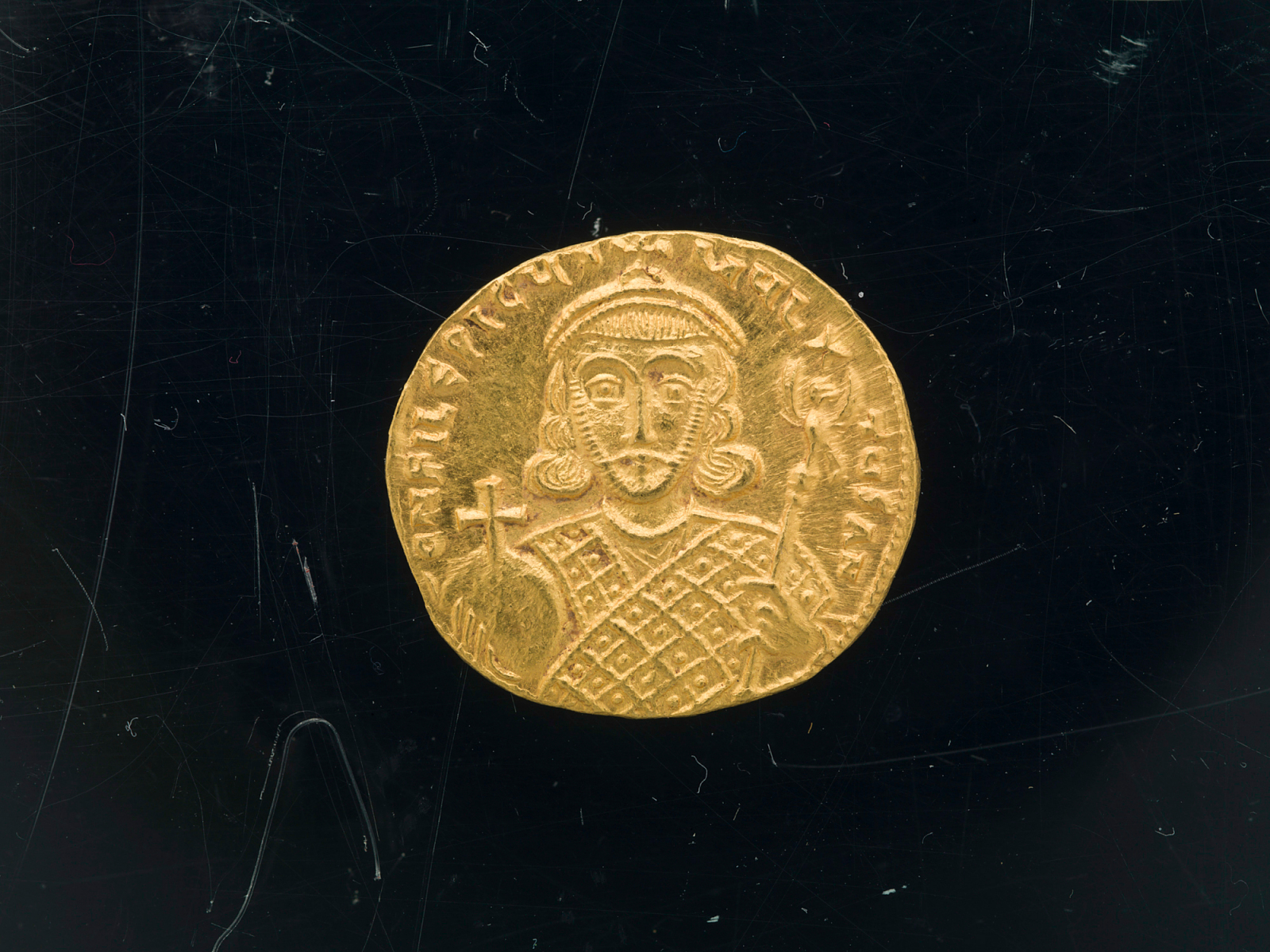
1 Solidus, Byzantine Empire, 711 - 713
Doctrinal reflection
This solidus, struck in Constantinople between AD 711 and 713, represents the brief reign of Philippicus Bardanes, whose usurpation followed the deposition of Justinian II. The coin was produced at the Constantinople mint, as confirmed by the standard CONOB reverse exergue denoting officina B of the imperial mint. The obverse carries a frontal bust of Philippicus rendered in the established Heraclian dynastic tradition: the emperor is depicted with a short beard, crowned, and wearing the loros—the jeweled imperial vestment derived from the consular trabea—while holding the globus cruciger and an eagle-tipped scepter surmounted by a cross, both instruments encoding divine mandate and universal sovereignty. The reverse bears the cross potent on three steps, a type introduced under Tiberius II Constantine and codified as the dominant reverse motif of Byzantine gold coinage by the late sixth century AD; it communicates the theology of imperial rulership grounded in the Passion and Resurrection. The legends FILEPICUS MULTUS AN and VICTORIA AVGUS conform to late antique acclamatory formulae invoking divine favor and military victory. Philippicus's reign was theologically contentious: he briefly restored Monothelitism, condemned by the Third Council of Constantinople (AD 680–681), making his coins documents of a disputed imperial ideology. The coin's schema—frontal imperial bust opposing the triumphant cross—participates in the broader Christological program linking terrestrial rule to eschatological kingship. This solidus is held at the National Museum of American History, Smithsonian Institution. Sources: Dumbarton Oaks Papers; Numismatic Chronicle; Byzantine and Modern Greek Studies.