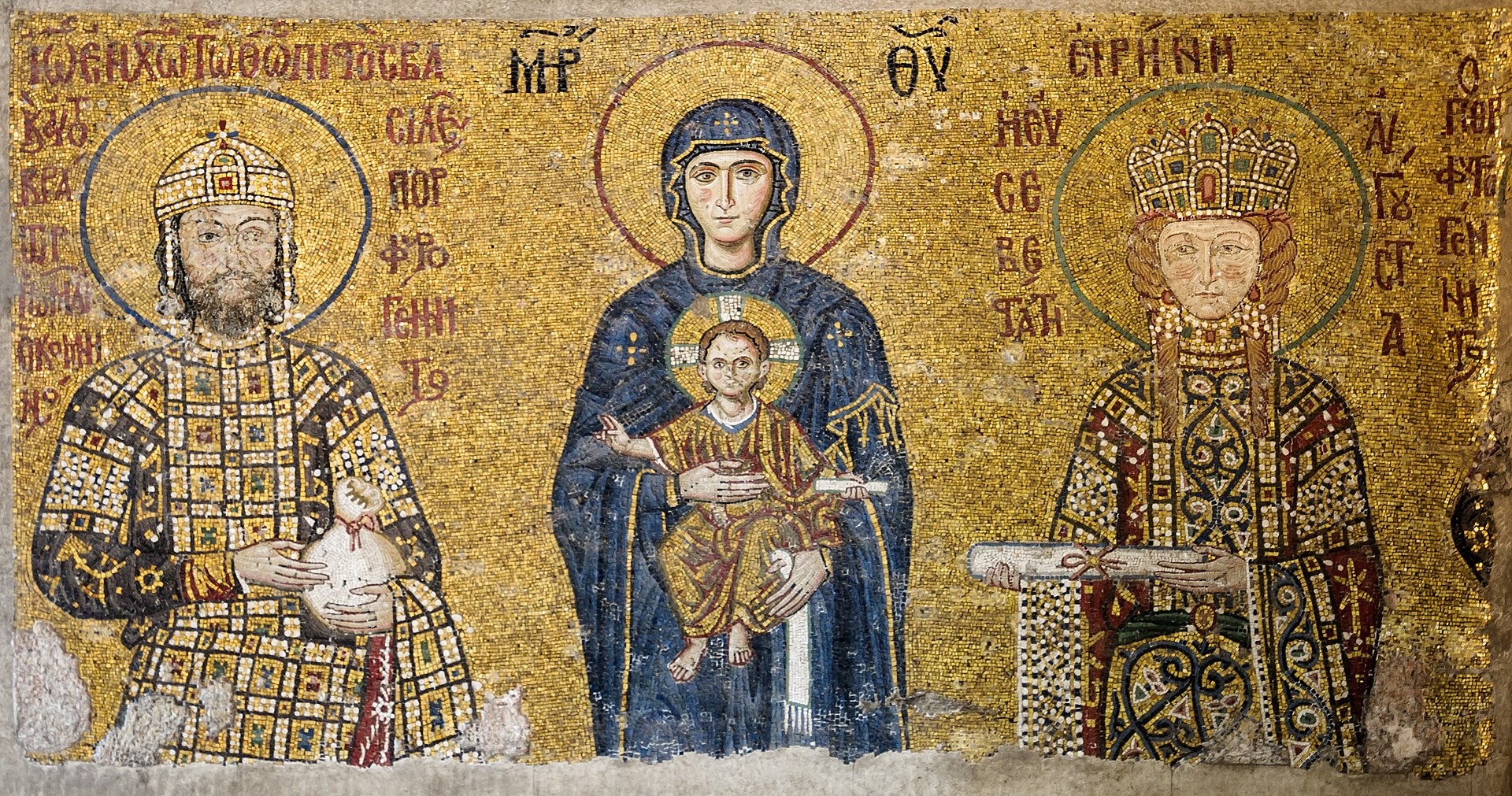
Comnenus Mosaic (Hagia Sophia)
Doctrinal reflection
The Comnenus Mosaic, located in the south gallery of Hagia Sophia, Constantinople, and dated to approximately AD 1122, constitutes one of the most significant surviving examples of high Komnenian imperial portraiture in mosaic. The panel depicts the Theotokos Orans in a frontal, enthroned position, presenting the Christ Child Emmanuel on her lap, flanked by the Emperor John II Komnenos on the right and Empress Irene of Hungary on the left. A secondary panel on the adjacent pier depicts their son Alexios, added shortly after the primary composition. The work functions as a pendant to the earlier Zoe panel (c. AD 1042), together forming a dynastic theological statement within the liturgically charged space of the south gallery. Executed in the refined, spiritualized aesthetic characteristic of twelfth-century Komnenian court art, the tesserae demonstrate exceptional chromatic gradation in the rendering of imperial vestments—notably John's deep purple loros with gold patterning and Irene's elaborate jeweled tablion. The theological program is explicit: imperial legitimacy is grounded in divine sanction mediated through the Theotokos, who physically and symbolically stands between emperor and Christ Child. John's offering posture and direct gaze toward the Virgin reinforce the intercessory theological schema. Iconographically, the composition rehearses the Deesis logic without the full tripartite arrangement, substituting the imperial couple for John the Baptist and aligning earthly sovereignty with Marian mediation. The mosaic has been treated extensively in scholarship as evidence of Komnenian patronage strategy and the theological function of imperial imagery in Byzantine devotional space. Sources: Dumbarton Oaks Papers; Byzantine and Modern Greek Studies; Byzantinische Zeitschrift.