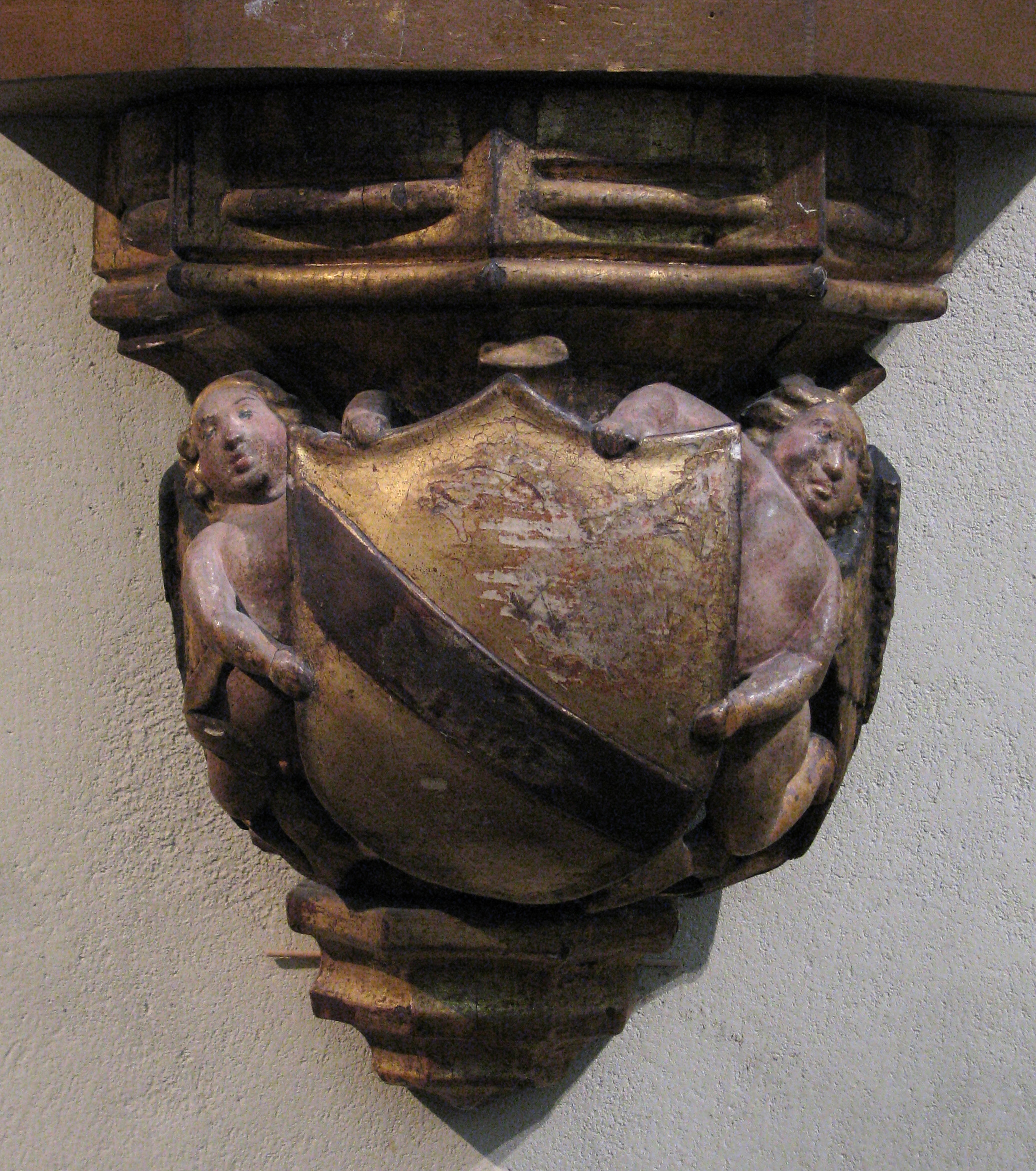
Corbel with Angels
Doctrinal reflection
This corbel with angels is a French carved wooden architectural element dating to the late fifteenth century AD, now housed in the Medieval Art collection of the Metropolitan Museum of Art (Gift of J. Pierpont Morgan, 1916). Corbels functioned as load-bearing projections in ecclesiastical and secular Gothic architecture, supporting beams, vault springers, or statuary, and were frequently decorated with figural programs to sanctify the structural fabric of the building. The angelic figures carved here participate in a well-established northern French Gothic tradition of integrating celestial hierarchies into architectural ornament, drawing on Pseudo-Dionysian angelic theology as transmitted through scholastic commentators such as Thomas Aquinas. Angels on corbels typically served apotropaic and doxological functions simultaneously, marking architectural thresholds as sacred space while symbolizing the perpetual liturgical praise offered before the divine throne. The painted polychrome surface, partially preserved, reflects the late medieval convention of animating carved wood with color to enhance legibility and devotional impact within dimly lit interiors. Stylistically, the late fifteenth-century date situates the work within the Flamboyant Gothic milieu, when figural carving in France retained elongated proportions and drapery with complex fold patterns. While the object is classified within the broader medieval corpus rather than strictly Byzantine, its angelic iconography shares theological vocabulary with Byzantine angelology, including the association of angels with divine liturgy drawn from Isaiah 6 and the Book of Revelation. Scholarly attention to such architectural fragments has increased through studies of dispersed medieval ensembles and Pierpont Morgan's systematic collecting of medieval decorative arts. Sources: Gesta (International Center of Medieval Art); Zeitschrift für Kunstgeschichte.