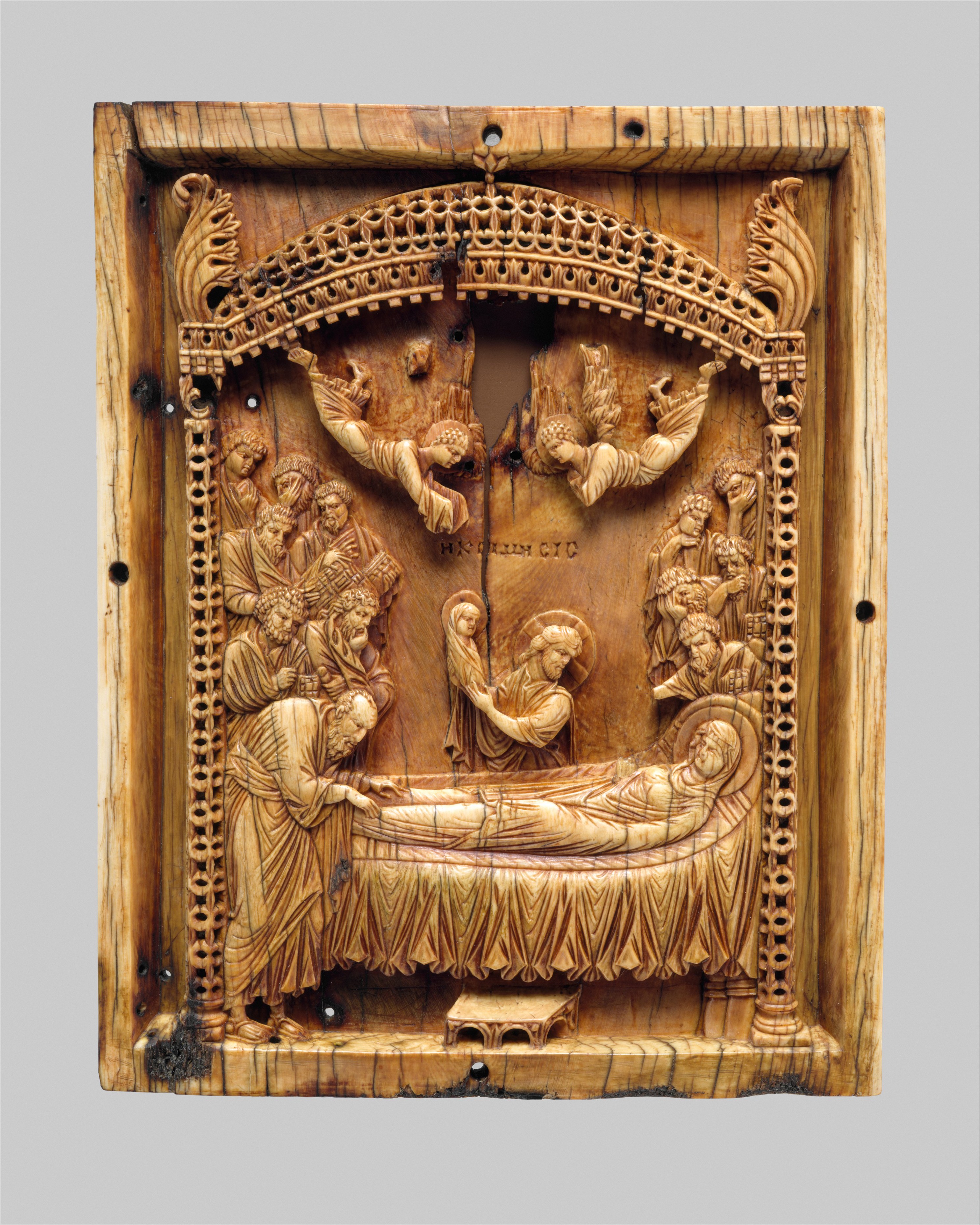
Icon with the Koimesis
Doctrinal reflection
This plaque icon depicting the Koimesis (Dormition of the Virgin) is a Byzantine ivory carving dateable to the late tenth century AD, likely produced in Constantinople during the Macedonian Renaissance, a period of exceptional refinement in ivory carving associated with imperial patronage. The medium—elephant ivory—situates the work among the prestigious triptych and plaque ivories characteristic of the middle Byzantine period, carved in high relief with meticulous attention to figural plasticity and drapery articulation. The Koimesis composition presents the Virgin Mary recumbent on a funeral bier, surrounded by grieving apostles and hierarchs, while the central vertical axis is dominated by Christ holding the soul of Mary as a swaddled infant, a theologically charged inversion of the Nativity image. Seraphim and angels frequently appear in the upper register, and in more elaborate versions bishops such as Dionysios the Areopagite and hierarchs are named by inscription. The scene encapsulates the Byzantine theological assertion of Mary's bodily assumption—or at minimum her privileged passage—serving liturgical commemoration on the Feast of the Dormition (August 15). Iconographically, the composition stabilized by the ninth century AD and became canonical in the middle Byzantine period, functioning as both devotional object and christological affirmation of the Incarnation through the dignity accorded to the Theotokos. The Metropolitan Museum's example, gifted by J. Pierpont Morgan in 1917, belongs to a significant corpus of Macedonian-era ivories studied extensively in connection with imperial and monastic workshop traditions. Sources: Dumbarton Oaks Papers; Cahiers archéologiques; Kurt Weitzmann, Ivory Sculptures of the Macedonian Renaissance.