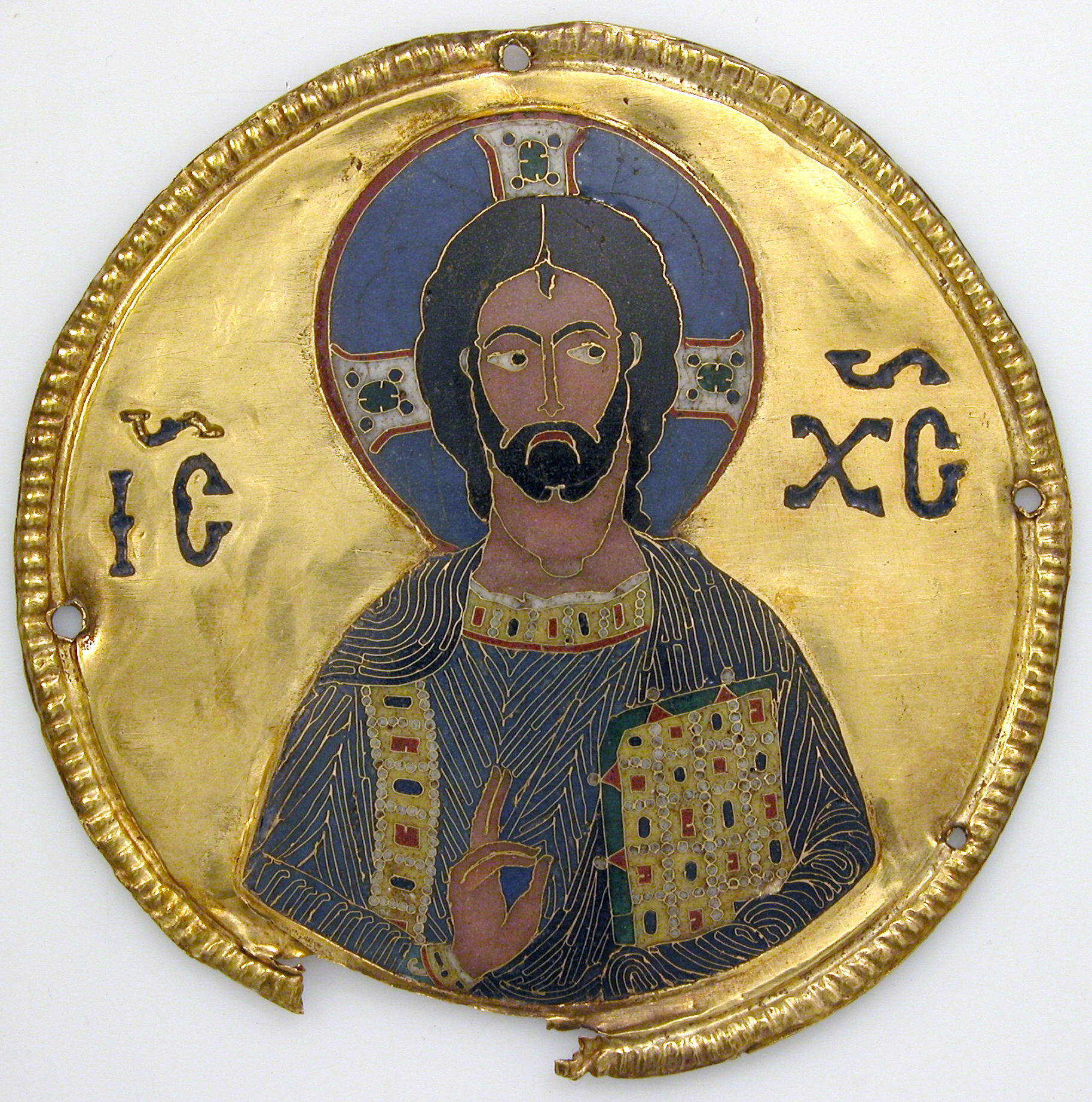
Medallion with Christ from an Icon Frame
Doctrinal reflection
This medallion with Christ from an icon frame is a Byzantine cloisonné enamel work dateable to approximately AD 1100, placing it firmly within the middle Byzantine period following the Triumph of Orthodoxy in AD 843. Executed in gold, silver, and enamel using the cloisonné technique—wherein thin metal strips partition colored vitreous pastes fired onto a metal ground—the piece exemplifies the extraordinary refinement of middle Byzantine metalwork at its apogee. Such medallions were typically positioned along the borders of large icon frames (okládы or revetments), functioning as a devotional and theological program that surrounded the central sacred image with subsidiary holy figures or, as here, a bust of Christ himself. The Christ bust in Byzantine medallion enamels typically renders the Pantokrator type: frontal, bearded, with the characteristic bipartite hair falling to the shoulders, and the right hand raised in a benediction gesture while the left holds the Gospels. The nimbus, often cruciform and enameled in rich blues and reds, reinforces Christ's divine identity. The cloisonné technique in Byzantium reached its technical zenith between the tenth and twelfth centuries AD, a period associated with imperial patronage and controlled workshop production in Constantinople. The Metropolitan Museum's acquisition via the J. Pierpont Morgan gift in 1917 places this piece within a celebrated collection of Byzantine luxury arts assembled in the early twentieth century. Comparable medallions are preserved in the treasury of San Marco, Venice, and in the Dumbarton Oaks Collection, Washington, D.C. Sources: Dumbarton Oaks Papers; Cahiers archéologiques; Byzantine and Modern Greek Studies.