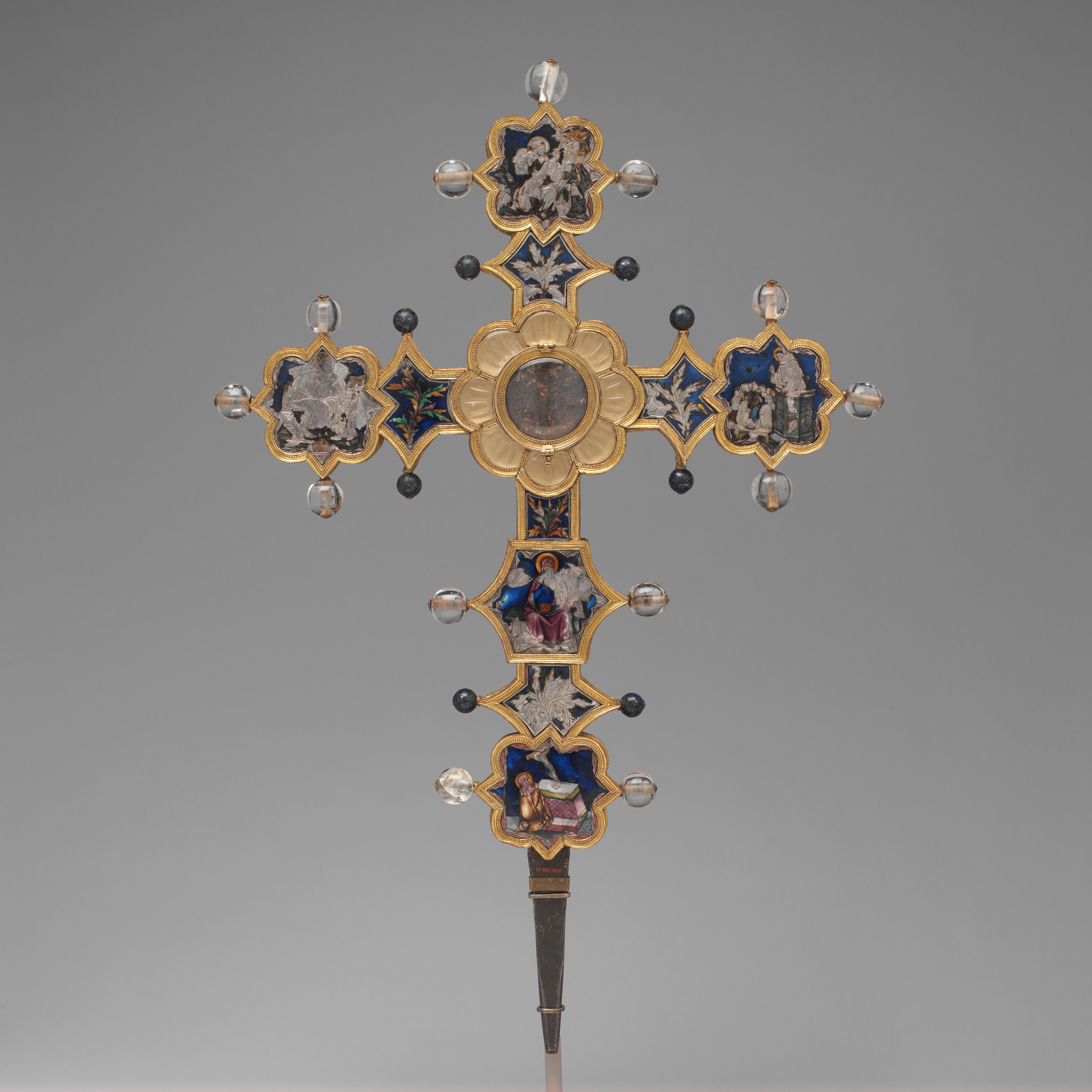
Reliquary Cross
Doctrinal reflection
This reliquary cross, dateable by consensus to approximately 1366–1400 AD and produced in Italy, represents a sophisticated convergence of goldsmithing technique and devotional program characteristic of late-medieval Western craft. The object combines translucent enamel (émail translucide sur relief), silver, gilded silver, rock crystal, glass, and an iron tang for mounting — a material vocabulary that situates it within the refined Italian production centers, likely Siena or Florence, where translucent enamel over embossed silver (basse-taille) reached its technical apogee in the Trecento. The rock crystal panels serve both an aesthetic and a relic-display function: crystal's optical clarity was deliberately exploited to render enclosed relics visible without compromising containment, a practice well documented in late-medieval treasury objects. The cross form itself participates in the crux gemmata tradition, wherein the instrument of crucifixion is transfigured into an object of jeweled splendor, a visual theology rooted in patristic commentary and expressed architecturally in mosaic programs from the fifth century AD onward. The iron tang indicates the cross was mounted — on a processional staff, altar, or reliquary shrine — and thus functioned liturgically within a Catholic devotional context involving relic veneration, a practice documented as historical norm but not presented here as biblical obligation. The donation by J. Pierpont Morgan (gift accepted 1917) reflects early twentieth-century American collecting of European ecclesiastical treasure. Scholarly evaluation must remain cautious regarding the specific relics once housed, as original documentation is absent from the surviving object. Sources: Hahnloser & Brugger-Koch, Corpus der Hartsteinschliffe; Gauthier, Émaux du moyen âge occidental; Metropolitan Museum of Art Bulletin.