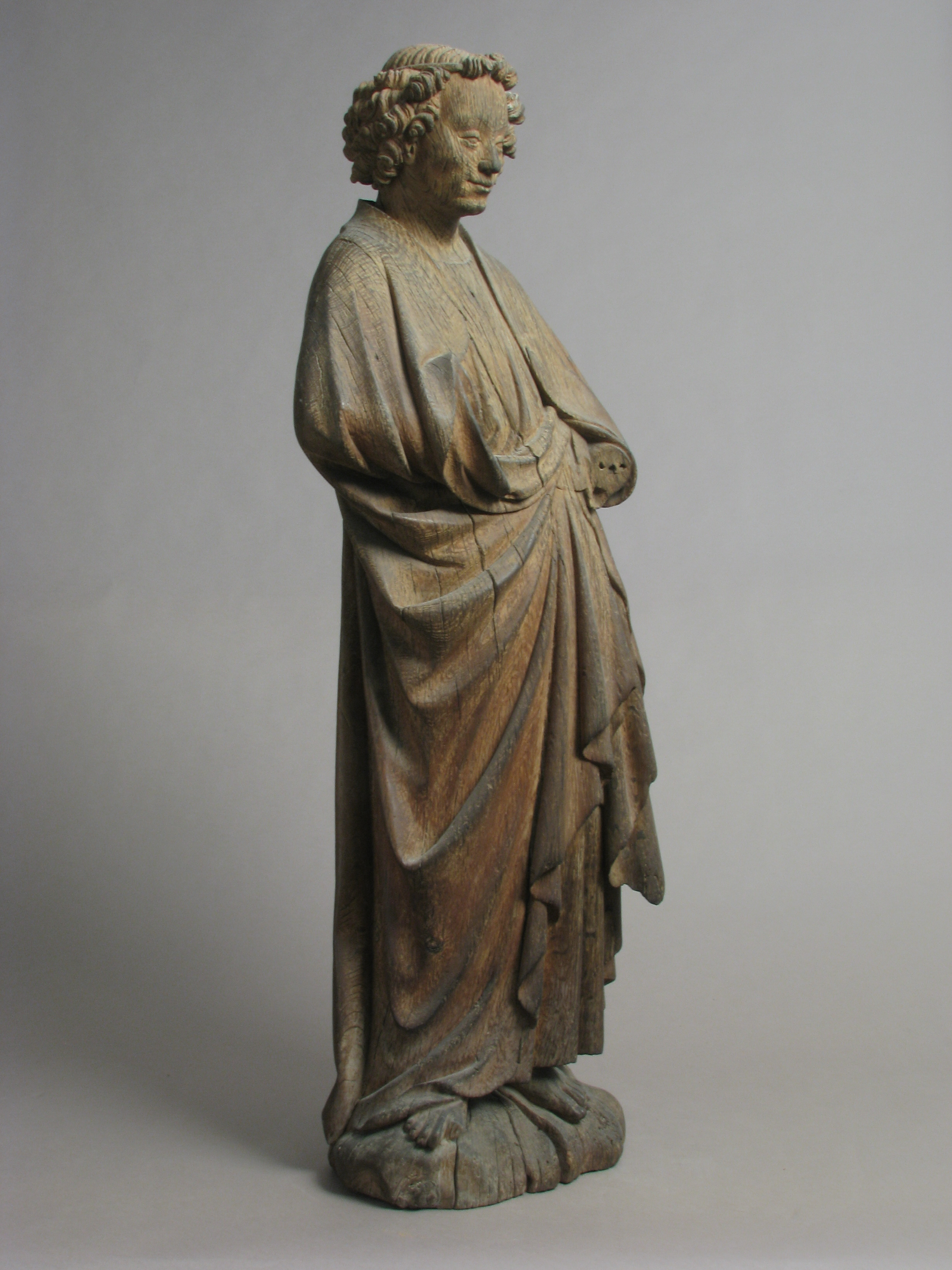
Saint John
Doctrinal reflection
This entry presents a methodological challenge for the Scriptorium archive: the object in question is a fifteenth-century English oak statue of Saint John, catalogued within the Metropolitan Museum of Art's Medieval Art holdings (Frederick C. Hewitt Fund, 1912), and is therefore a Western European wooden sculpture rather than a Byzantine artwork. Byzantine art production—icons, mosaics, frescoes, and illuminated manuscripts—belongs to the Eastern Christian tradition centered on Constantinople and its cultural sphere, operating under distinct theological, liturgical, and aesthetic conventions. An English oak figure of this period falls within the Gothic sculptural tradition of late medieval Western Europe, characterized by naturalistic drapery, contrapposto posture, and workshop practices fundamentally different from Byzantine icon production governed by hesychast theology and the decisions of the Seventh Ecumenical Council (AD 787). The figure of Saint John—most plausibly the Evangelist or the Baptist—does carry iconographic significance shared across Eastern and Western Christianity, including associations with Johannine theology, the Logos prologue, and eschatological witness. However, to process this object within the Byzantine archive schema would produce academically misleading classification. Scholars consulting this record should note the object belongs properly to Late Gothic English sculptural studies. The Metropolitan's own departmental cataloguing places this work in Medieval Art broadly construed. Any Byzantine archive cross-reference should be limited to shared hagiographic tradition rather than formal or theological equivalence. Sources: M. Camille, Gothic Art: Glorious Visions (1996); P. Williamson, Gothic Sculpture 1140–1300 (1995); Metropolitan Museum of Art Bulletin, Medieval collections documentation.