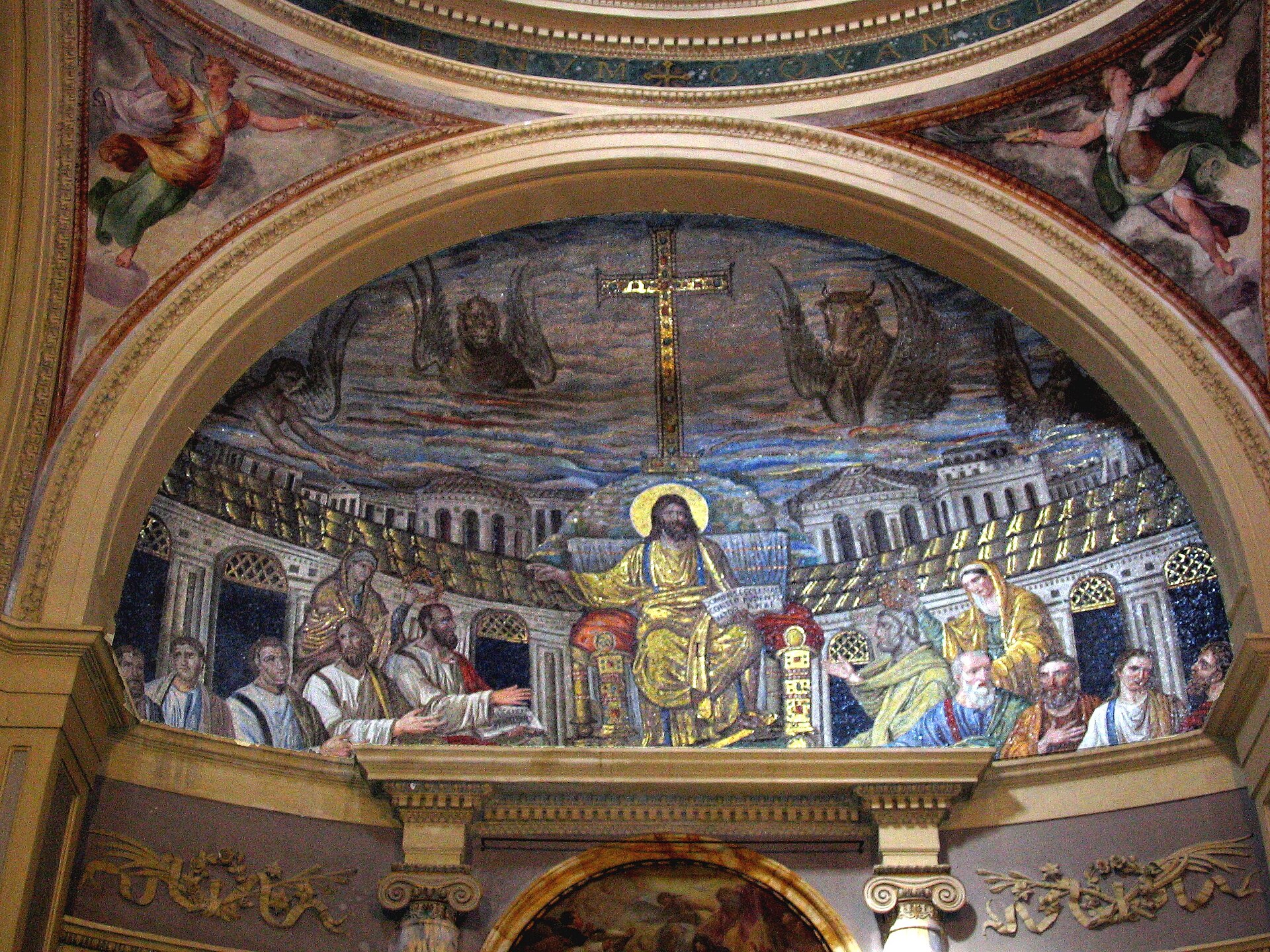
Santa Pudenziana Apse Mosaic, Rome
Doctrinal reflection
The apse mosaic of Santa Pudenziana, Rome, dateable to c. 400–417 AD and associated with the pontificate of Innocent I, constitutes the earliest extant monumental apse mosaic in the Latin West and a foundational document of Christian imperial iconography. Executed in tesserae of glass and stone set against a gold ground, the composition presents a colossal, frontally enthroned Christ robed in gold, holding an open codex inscribed 'DOMINUS CONSERVATOR ECCLESIAE PUDENTIANAE,' and flanked by two rows of apostles depicted as togated Roman senators—a deliberate transposition of the imperial adventus and consilium into a Christian theological framework. Behind the apostles stand two female figures, conventionally identified as Pudenziana and Prassede, crowning the flanking groups. The background registers a detailed cityscape integrating identifiable Jerusalem topography—including the Anastasis rotunda and the Constantinian basilica of the Holy Sepulchre—with the heavenly Jerusalem of Revelation, while a monumental jeweled cross on Golgotha anchors the cosmic axis. Above, partially damaged by later architectural interventions, the four living creatures of Ezekiel and Revelation emerge from clouds, identifying the enthroned Christ with the apocalyptic pantokrator. Scholarly debate continues over the extent of medieval repaints, particularly in the figural zone, and over whether the seated figures originally numbered thirteen (the twelve apostles plus Paul). The mosaic's conflation of Greco-Roman rhetorical and imperial conventions with eschatological Christian content makes it indispensable for understanding the Theodosian-era negotiation between classical form and emergent Christian visual theology. Sources: Dumbarton Oaks Papers; Papers of the British School at Rome; Rivista di Archeologia Cristiana.