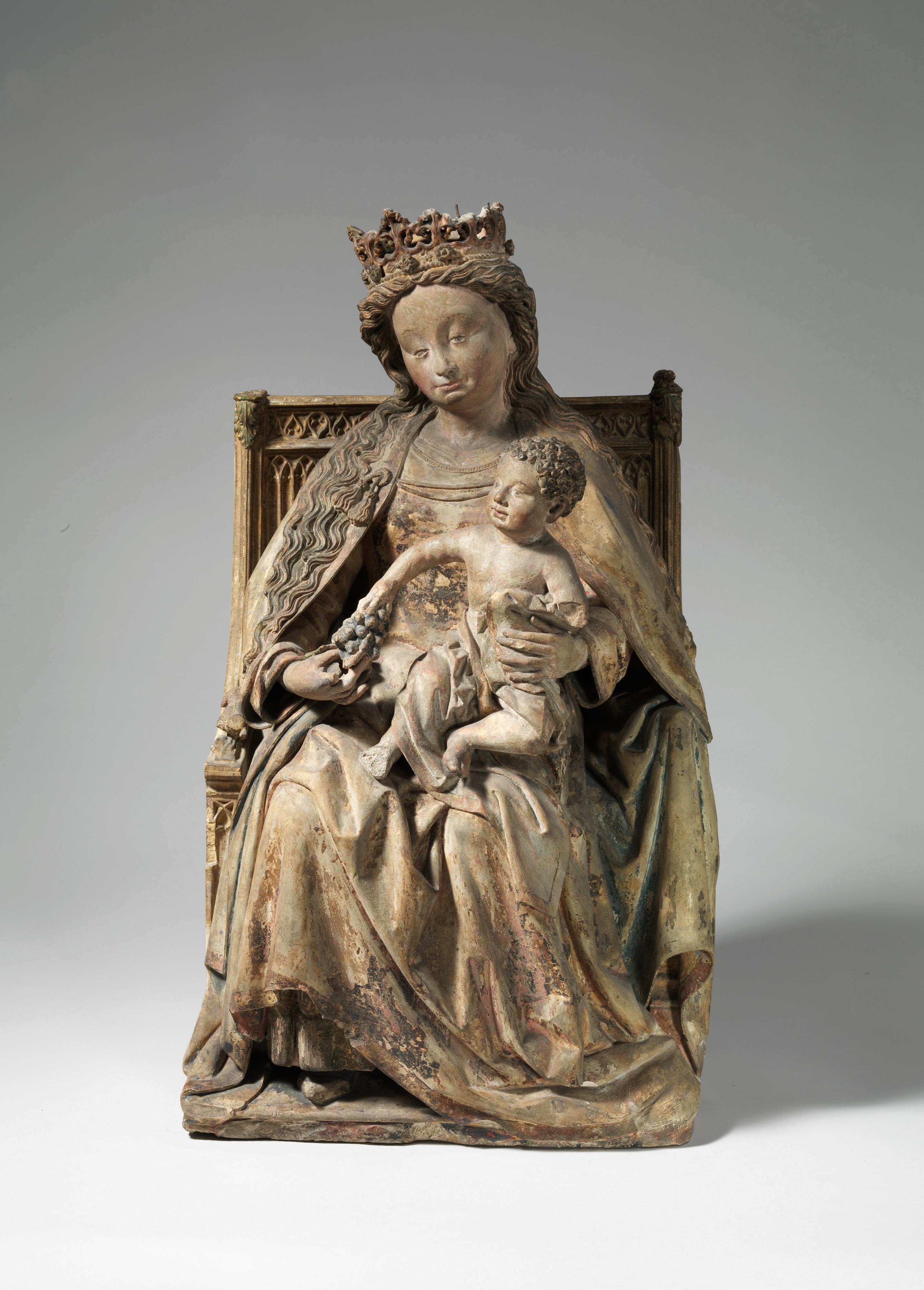
Virgin and Child
Doctrinal reflection
This entry presents a methodological boundary case for the Scriptorium archive: the object in question is a French limestone sculpture of the Virgin and Child dating to the early sixteenth century, gifted to the Metropolitan Museum of Art by J. Pierpont Morgan in 1916. As a Western European devotional sculpture, it falls outside the strict parameters of Byzantine art history and cannot be classified within the Byzantine iconographic tradition without scholarly misrepresentation. The work belongs instead to the Late Gothic or early Renaissance tradition of French Marian sculpture, in which the Virgin is typically depicted as a crowned Queen of Heaven presenting the Christ Child in a courtly, humanized idiom distinct from the hieratic frontality of Byzantine Marian types such as the Hodegetria or Theotokos Eleusa. Traces of polychromy indicate original painted surfaces, a characteristic of Western medieval sculptural practice. The theological program—emphasizing the Incarnation and Mary's intercessory role—does parallel Byzantine Marian iconography in doctrinal substance, but the formal vocabulary, material, and devotional context are categorically Western. Inclusion in a Byzantine archive would constitute a category error. Scholars wishing to contextualize this work comparatively might consult literature on Marian iconography across medieval traditions, noting both convergences and divergences in the representation of the Theotokos. This entry is flagged as non-applicable for full Byzantine classification. Sources: Metropolitan Museum of Art Bulletin; Gazette des Beaux-Arts; Speculum: A Journal of Medieval Studies.