Altarpiece
Doctrinal reflection
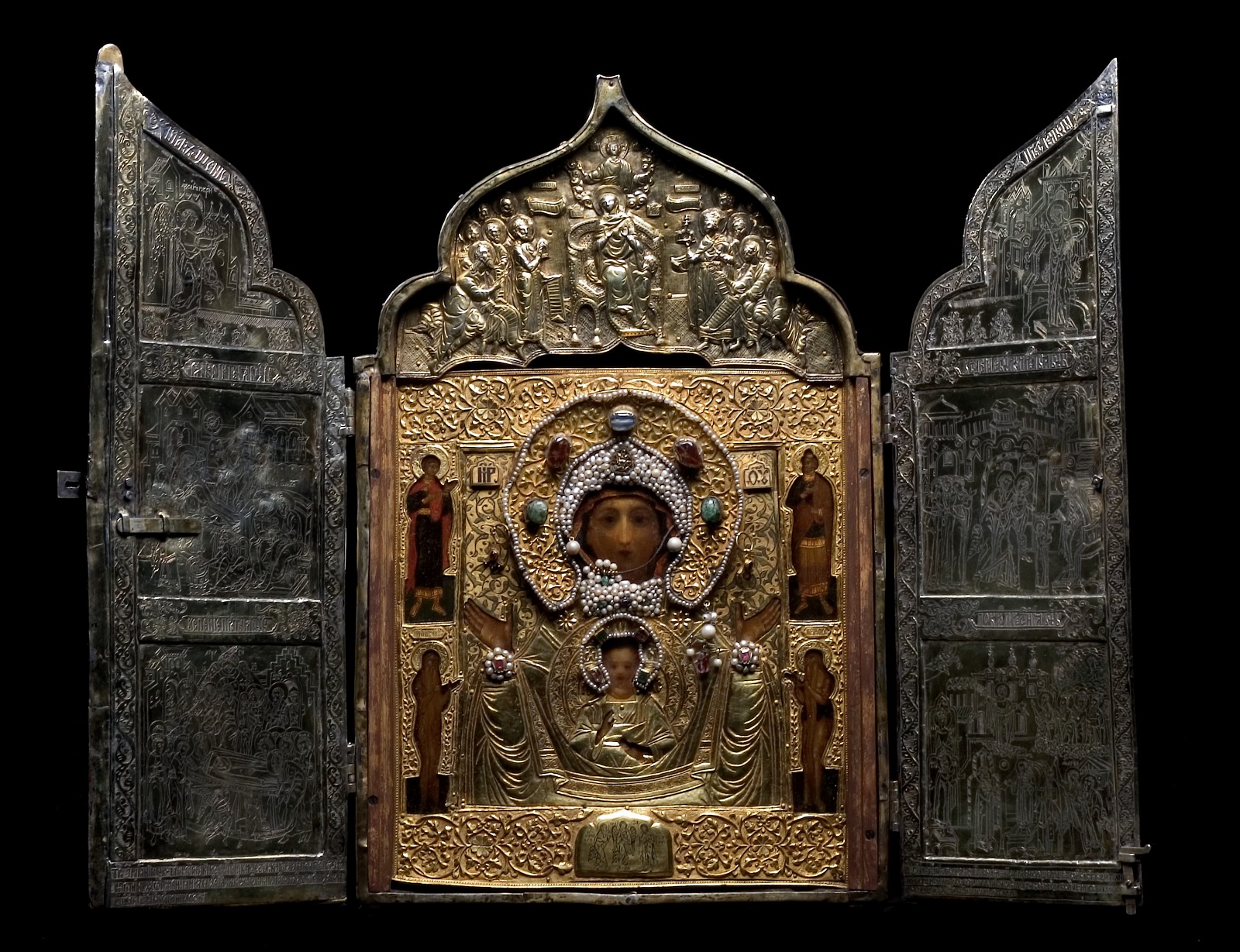
This triptych altarpiece, housed in the Smithsonian American Art Museum, is identified as a Russian icon of the twelfth century AD, situating it within the middle Byzantine period following the Christianization of Kievan Rus under Prince Vladimir I (r. 980–1015). The conversion event of c. 988 AD catalyzed a sustained program of ecclesiastical construction and artistic importation from Constantinople, establishing the iconographic and technical conventions that Russian workshops would systematize and perpetuate. The present triptych exemplifies the oklad tradition—an applied metallic revetment of chased and pierced gold overlaying a painted wooden substrate—adorned with pearls and precious stones forming jewel-encrusted haloes characteristic of high-status devotional objects. The deliberate cutting away of sections of the oklad to expose the underlying painted panels reflects either later restoration decisions or a partially stripped revetment, allowing modern viewers to perceive both the metalwork and the tempera-on-wood strata simultaneously. The central panel presents a Hodegetria or Eleusa type Virgin with the Christ Child, both haloed, a compositional formula deriving directly from Constantinopolitan prototypes imported into Rus in the late tenth and eleventh centuries AD. The lateral wings contain narrative cycles drawn from Marian and Christological hagiographic programs typical of Byzantine triptych formats. Scholarly assessment underscores the hybrid nature of such objects: Byzantine in theological program and formal vocabulary, yet increasingly articulating a nascent Russian regional sensibility in craft execution. Sources: Byzantinische Zeitschrift; Dumbarton Oaks Papers; Arte Medievale.