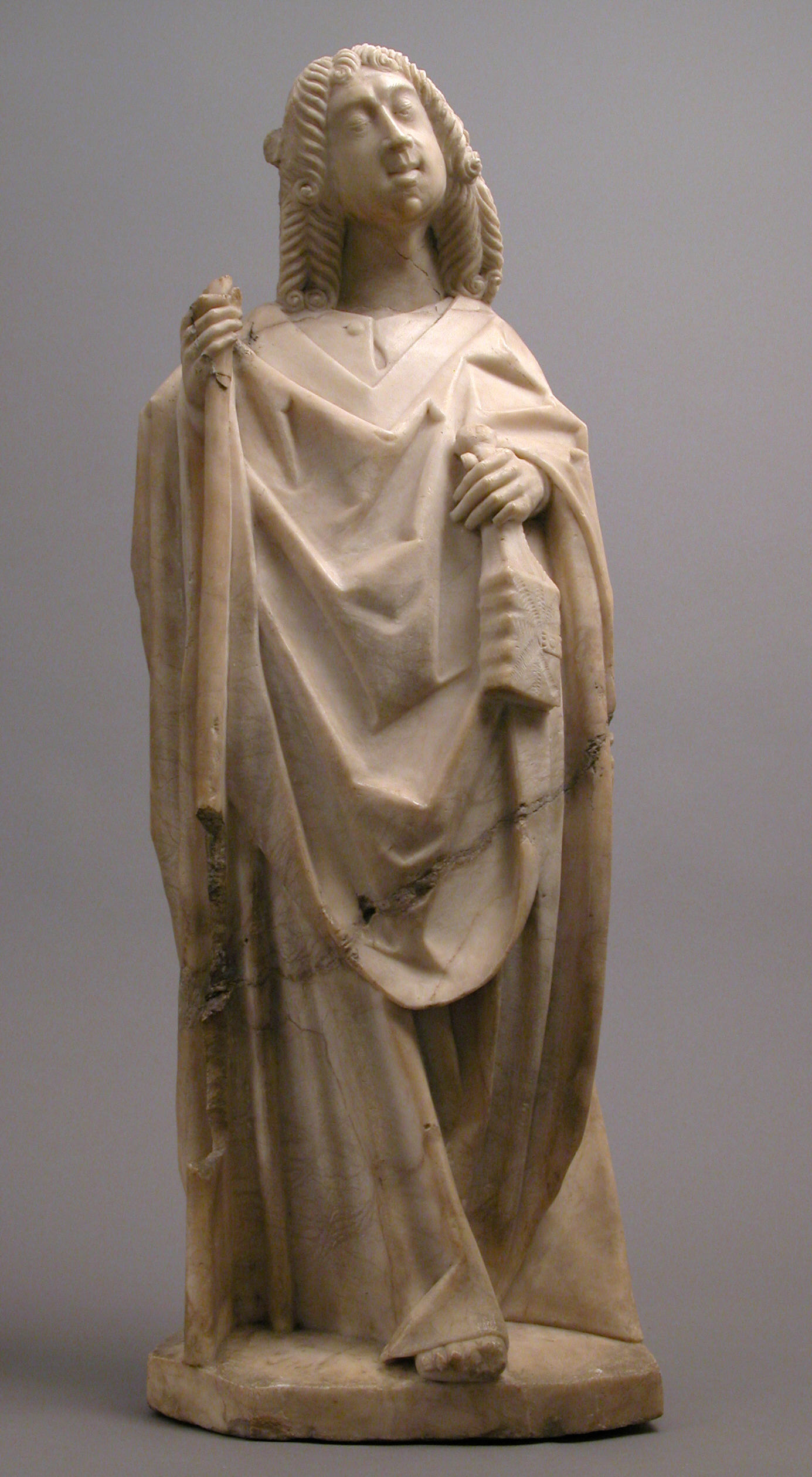
Apostle
Doctrinal reflection
This alabaster statuette of an Apostle, dated to the fifteenth to sixteenth century and attributed to Spanish manufacture, presents a methodological boundary case for a Byzantine archive: it is a Western medieval sculptural object rather than a product of the Byzantine pictorial tradition. The Metropolitan Museum of Art accession, donated by J. Pierpont Morgan in 1916, situates it within Iberian Gothic or early Renaissance devotional production, a milieu shaped by Flemish and Franco-Burgundian sculptural currents rather than by Eastern iconographic programs. Alabaster carving for apostolic statuettes flourished notably in late medieval England and Iberia, where alabaster retable figures were produced in serial workshops for church furnishing and private devotion. The medium—three-dimensional sculpture in the round—is categorically distinct from the painted, mosaic, or enamel traditions of Byzantium, where theological resistance to free-standing devotional sculpture was well established by the post-Iconoclastic settlement of 843 AD. Iconographically, apostle statuettes in this tradition are typically identified by attribute objects (book, scroll, instrument of martyrdom) and costume conventions derived from Latin liturgical imagery rather than Byzantine hierarchical abstraction. The figure's theological program would have centered on apostolic witness and intercession within a Western Scholastic framework. For archival completeness, this entry is flagged as a non-Byzantine comparandum: it may illuminate cross-cultural devotional parallels but does not represent Byzantine art-historical evidence. Scholarly engagement with related material appears in: Art Bulletin (studies in Iberian Gothic sculpture); Metropolitan Museum Journal (Morgan collection provenance); Gesta (medieval sculpture and devotional function).