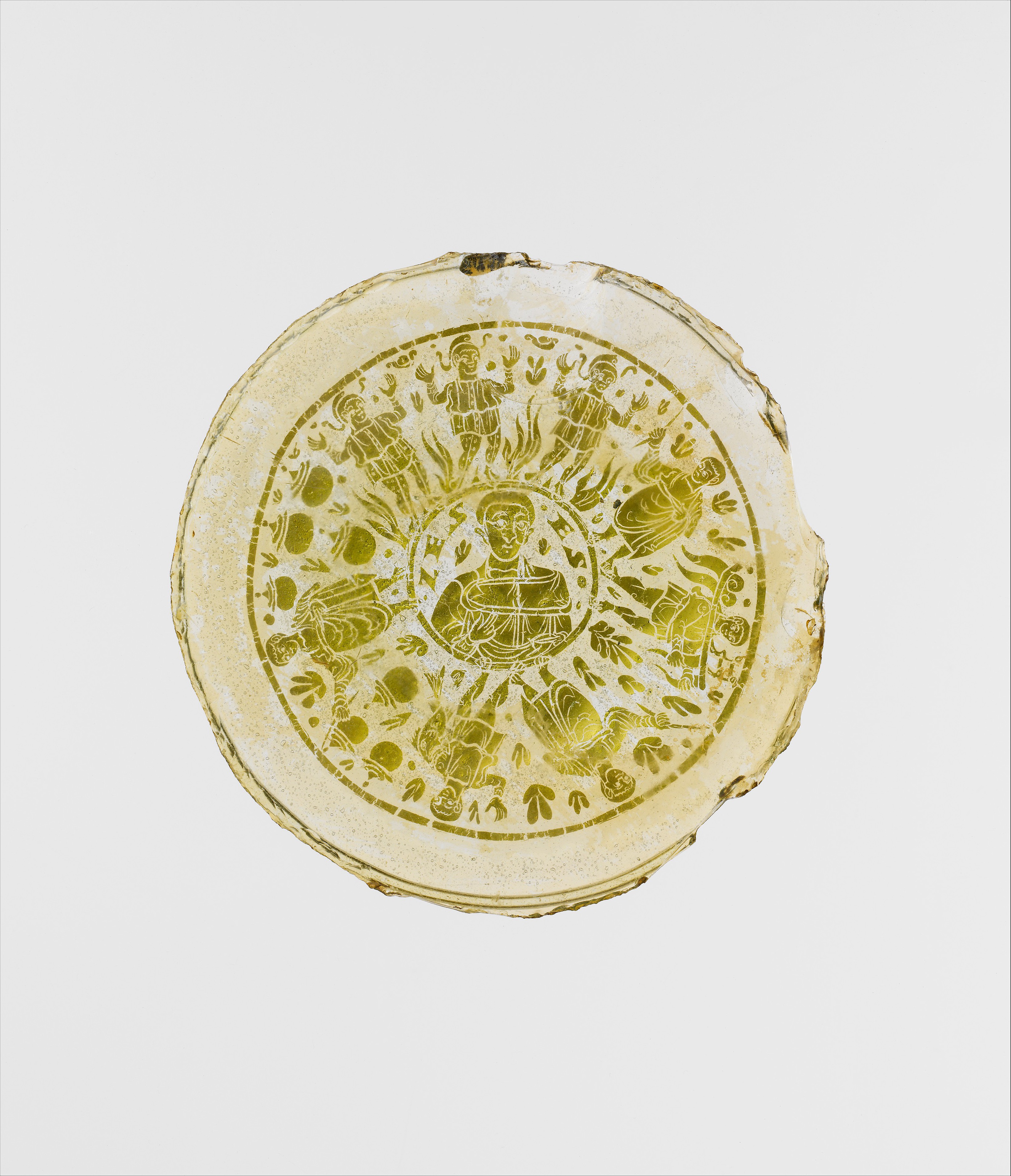
Bowl Base with Miracle Scenes
Doctrinal reflection
This bowl base with miracle scenes represents a distinctive category of Late Antique luxury object: a fondi d'oro, or gold-glass roundel, produced through a technique in which gold leaf was engraved with figural imagery and then fused between two layers of glass. Dated conservatively to ca. 350–400 AD, the object belongs to the floruit of gold-glass production centered in Rome but extending across the broader Mediterranean world of the late Roman and proto-Byzantine cultural sphere. The Metropolitan Museum of Art acquired the piece through the Rogers Fund in 1916, and it is held in the Medieval Art galleries. The iconographic program depicts miracle scenes drawn from the Gospel tradition, a subject category well attested in the catacomb paintings and sarcophagus reliefs of the same period. Commonly represented episodes include the multiplication of loaves and fishes, the healing of the paralytic, the raising of Lazarus, and the transformation of water into wine at Cana—scenes functioning as typological demonstrations of divine power and salvific efficacy rather than straightforwardly narrative illustration. The figure of Christ in such contexts is typically rendered beardless and youthful, reflecting the Hellenistic tradition dominant before the consolidation of the bearded hieratic type in the middle Byzantine period. Scholarly significance resides in the object's documentation of christological imagery circulating in portable, domestic, and funerary contexts prior to the formal Iconoclast controversy, attesting to the pre-843 visual culture in which sacred imagery permeated everyday aristocratic and liturgical life. Sources: Journal of Glass Studies; Dumbarton Oaks Papers; Kurt Weitzmann, ed., Age of Spirituality (Metropolitan Museum of Art, 1979).