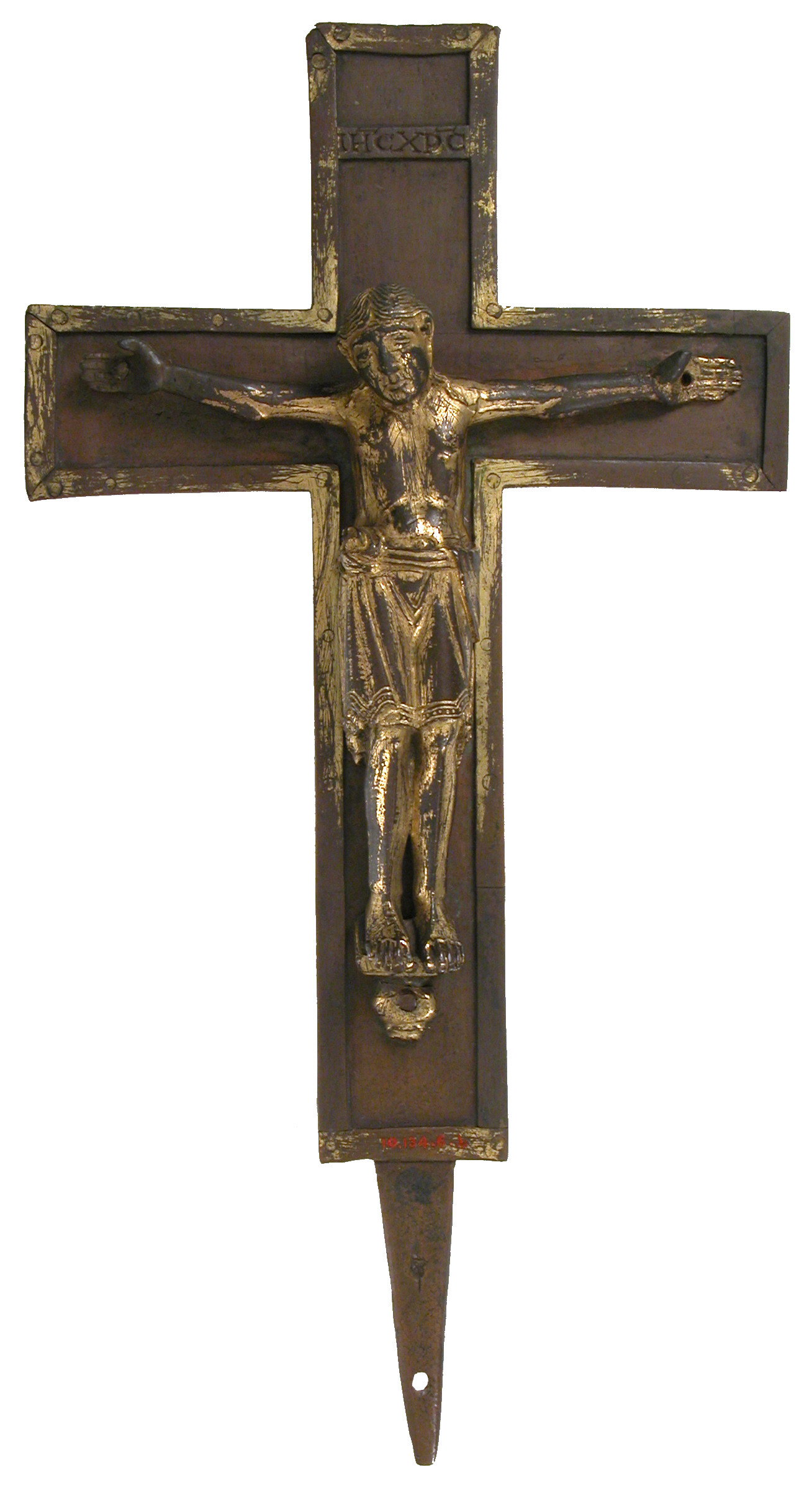
Crucifix
Doctrinal reflection
This gilded copper alloy crucifix, dated to approximately 1125–1150 AD and produced in a German workshop, represents a significant example of Romanesque metalwork within the broader tradition of Western medieval devotional objects. While geographically and culturally situated within the Latin West rather than the Byzantine East, the object participates in a shared visual theology of the Crucifixion that draws heavily on earlier Byzantine iconographic programs, particularly the Christus triumphans type in which Christ appears on the cross with dignified composure rather than acute suffering. German Romanesque metalwork of the Mosan and Rhine-Meuse regions during this period demonstrates sustained engagement with Byzantine formal conventions transmitted through ivory carving, enamel work, and manuscript illumination. The gilded surface amplifies the theological significance of the image, evoking the lux divina associated with gold ground in Byzantine panel painting and mosaic. The corpus would have originally served either as a processional cross, an altar cross, or a reliquary fitting within a liturgical ensemble. The Christological program centers on the Incarnation and Redemptive Sacrifice, with the material transformation of base copper into gilt surface functioning as a theological metaphor for transfiguration. The Metropolitan Museum's acquisition of this piece via the Rogers Fund in 1910 situates it within early twentieth-century collecting priorities that emphasized formal continuity between Byzantine and Western Romanesque traditions. Conservative scholarly consensus places this object within the broader Ottonian-to-Romanesque transitional moment in German ecclesiastical metalwork. Sources: Gesta: International Center of Medieval Art; Zeitschrift für Kunstgeschichte; Metropolitan Museum Journal.