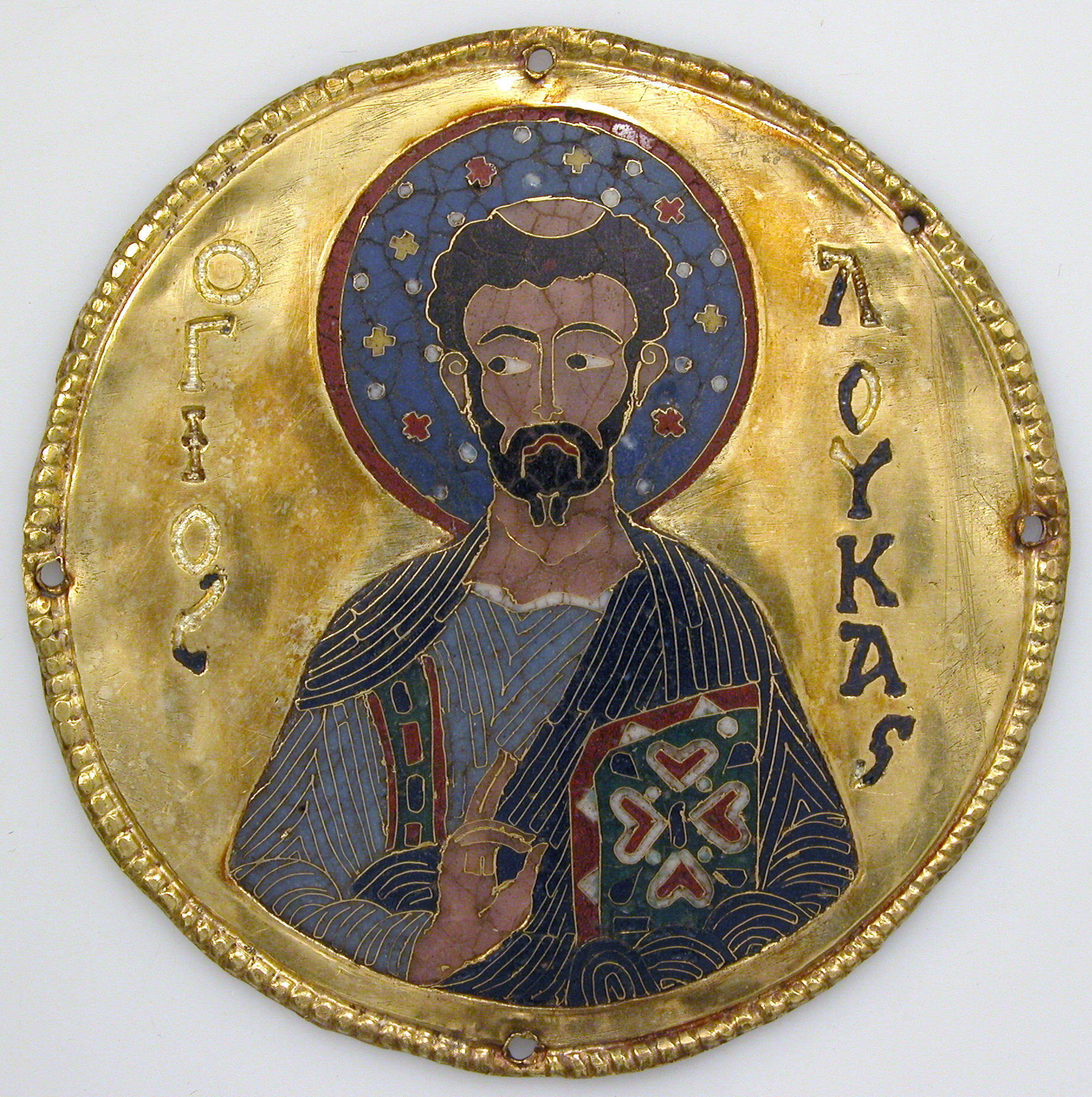
Medallion with Saint Luke from an Icon Frame
Doctrinal reflection
This medallion depicting Saint Luke, originally forming part of an icon frame (epitaxis), is a fine example of Byzantine cloisonné enamel craftsmanship dateable to circa 1100 AD, placing it firmly within the Middle Byzantine period following the Triumph of Orthodoxy in 843 AD. Executed in gold and silver with vitreous enamel cells, the work exemplifies the technical mastery of Constantinopolitan goldsmiths at the height of Komnenian artistic production. Cloisonné enamel medallions of this type were typically mounted as border elements surrounding a central devotional image—frequently of the Theotokos or Christ—thereby constructing a hierarchical visual program in which apostolic and evangelical witnesses frame the primary sacred subject. Saint Luke holds particular theological significance in Byzantine iconographic tradition as both Evangelist and putative first iconographer, credited in hagiographic literature with painting the earliest portrait of the Virgin. His inclusion on an icon frame thus operates on multiple levels: as apostolic guarantor of scriptural authority, as patron of image-making itself, and as intercessor within the liturgical function of the object. The bust-length format within a circular medallion follows established Middle Byzantine conventions seen across comparable enamels in the treasury of San Marco, Venice, and the Pala d'Oro. The Morgan gift of 1917 brought numerous such Byzantine metalwork pieces into the Metropolitan Museum's collection, making this medallion an important representative of Komnenian luxury arts accessible to Western scholarship. Its technical refinement—crisp cell partitions, translucent enamel grounds—supports a Constantinopolitan atelier attribution. Sources: Dumbarton Oaks Papers; Byzantine and Modern Greek Studies; Metropolitan Museum Journal.