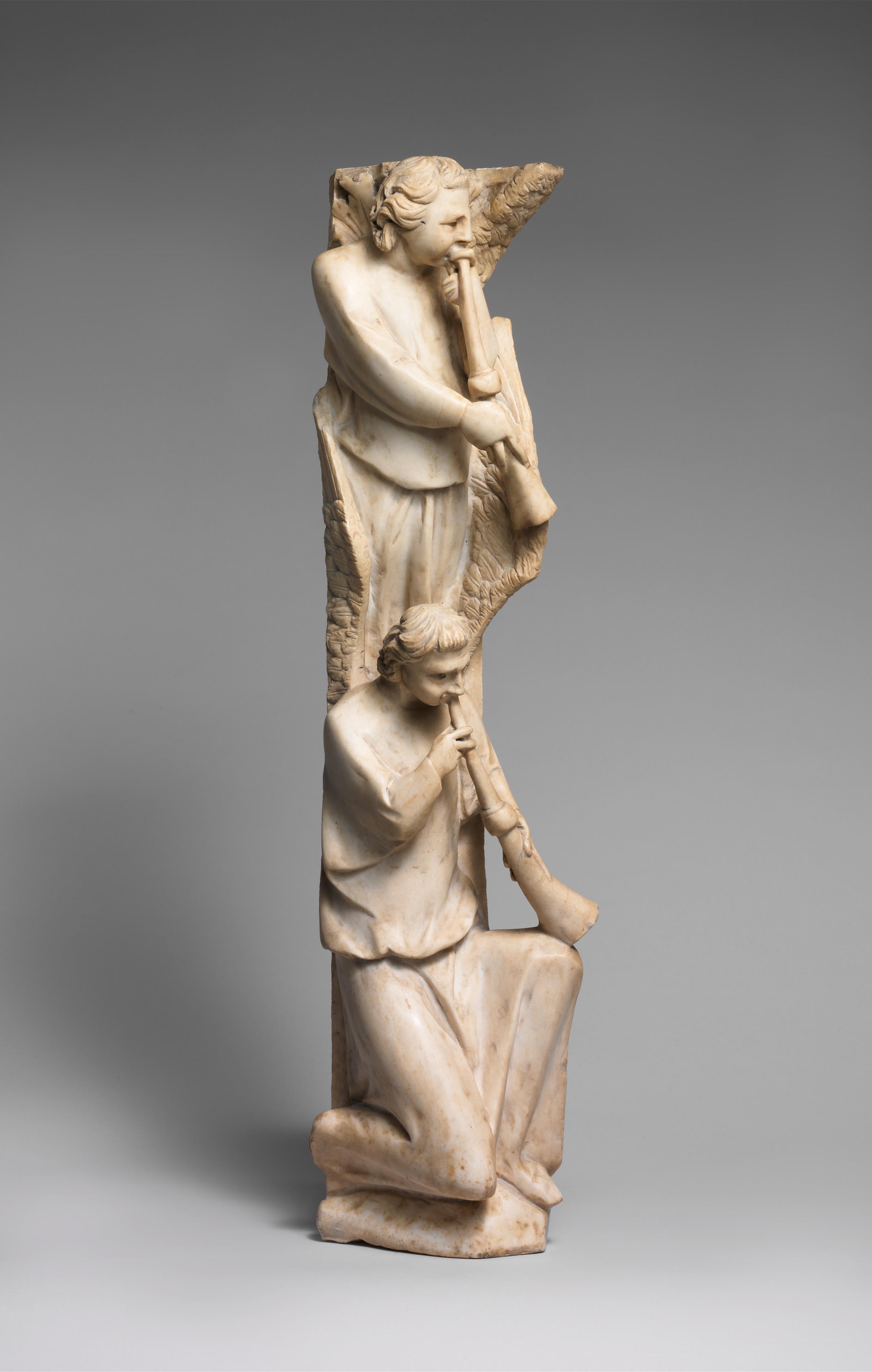
Pilaster of Angels Sounding Trumpets from the Parapet of a Pulpit
Doctrinal reflection
This marble pilaster, dated 1302–1310 and attributed to Central Italian workshop production, originates from the parapet of a pulpit and is now held in the Medieval Art collection of the Metropolitan Museum of Art (Frederick C. Hewitt Fund, 1910). The material is Lunense marble quarried at Carrara, with preserved traces of polychromy indicating original painted embellishment. Pulpit parapet reliefs of this period functioned as theological declarations in liturgical space: the pulpit was the locus of scriptural proclamation, and its sculptural program was calculated to reinforce the gravity of that proclamation visually. The motif of angels sounding trumpets is drawn directly from the eschatological imagery of the Apocalypse (Revelation 8–11) and from Paul's articulation of resurrection at the last trumpet (1 Corinthians 15:52; 1 Thessalonians 4:16). Positioned on a pulpit parapet, trumpet-sounding angels frame the act of preaching as anticipatory of final divine judgment, linking the spoken Word to eschatological summons. Stylistically, the work participates in the Central Italian Gothic sculptural tradition energized by Nicola Pisano and his workshop, whose pulpit programs at Pisa (1260) and Siena (1265–68) established the template for figural pulpit decoration throughout the Trecento. The angel figures in this tradition are typically rendered with drapery influenced by classical spolia reabsorption and with dynamic, forward-pressing postures. Traces of paint on Lunense marble are a significant material survival, attesting to the chromatic richness routinely suppressed in later centuries of display. The entry falls outside strictly Byzantine production but represents the Western medieval parallel tradition in liturgical furnishing sculpture. Sources: Gaborit-Chopin, Sculpture médiévale; Moskowitz, Italian Gothic Sculpture; Metropolitan Museum of Art collection records.