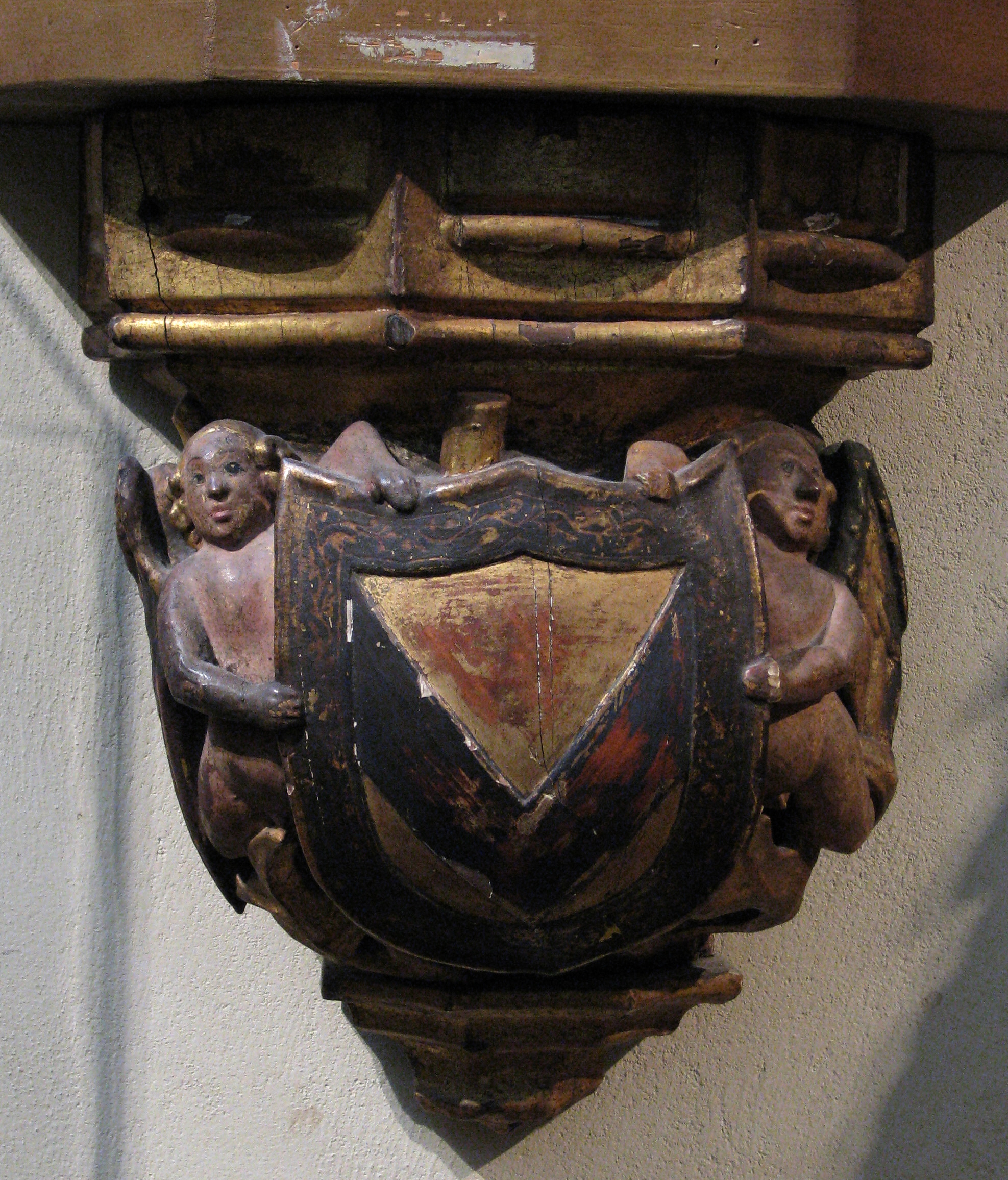
Corbel with Angels
Doctrinal reflection
This carved wooden corbel with polychrome paint decoration, dateable to the late fifteenth century AD and of French manufacture, represents a category of architectural sculpture in which angelic figures serve a load-bearing or pseudo-structural function within ecclesiastical or elite secular interiors. Corbels of this type were typically integrated into choir stalls, rood screens, retables, or the wooden vaulting systems of Flamboyant Gothic chapels, where sculpted angels functioned simultaneously as structural supports and theological emblems of the celestial hierarchy attending the liturgy. The angels depicted here participate in a long iconographic tradition deriving from Pseudo-Dionysian angelology, in which the angelic orders mediate between the divine and human spheres; their placement at architecturally liminal points—brackets, vault springers, canopy supports—enacts this mediating role spatially. French late Gothic wood sculpture of this period is characterized by increasing naturalism in drapery treatment, individualized facial expression, and sophisticated deployment of polychromy to simulate textile richness. The Morgan provenance situates this object within the major wave of European medieval material acquisition that transformed American collections in the early twentieth century AD. Scholarly analysis must consider the workshop traditions of the Loire Valley and Île-de-France regions, where comparable corbel programs survive in situ, as well as the liturgical context that governed the iconographic program of angelic supporters. The piece is architecturally dependent rather than independently devotional, and its theological significance is inseparable from its original spatial function. Sources: Gesta (International Center of Medieval Art); Burlington Magazine; Speculum (Medieval Academy of America).