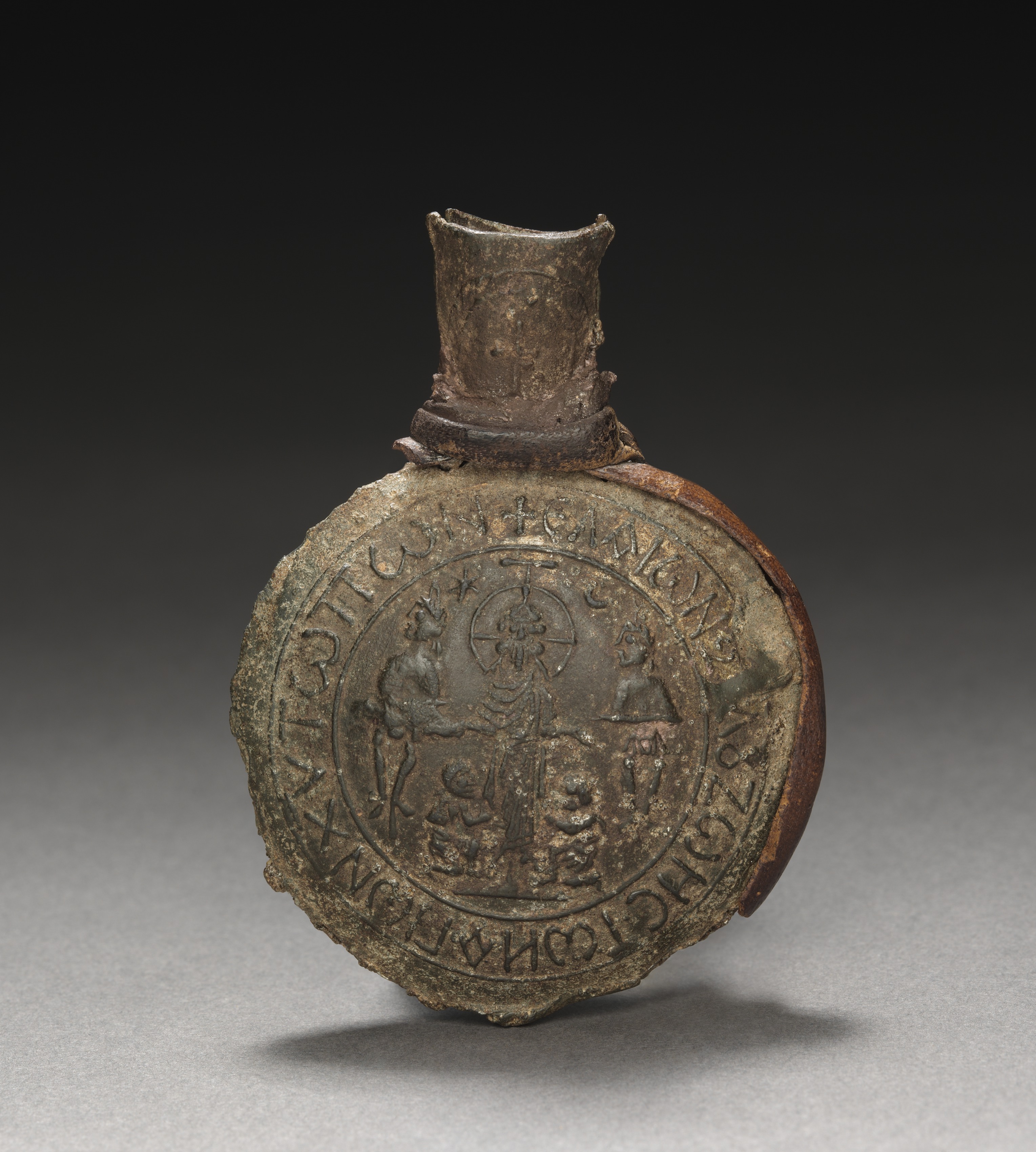
Pilgrim's Ampulla with the Crucifixion (front)
Doctrinal reflection
This pilgrim's ampulla, dated to approximately 600 AD and attributed to the early Byzantine period in Palestine, is a small tin-lead alloy vessel bearing a cast Crucifixion scene on its obverse and an Ascension on its reverse. The object belongs to a well-documented corpus of loca sancta souvenirs produced for pilgrims visiting holy sites in Palestine, particularly Jerusalem and its environs. The Crucifixion composition on the front follows a standardized early Byzantine iconographic formula: Christ is depicted frontally, robed in the colobium (a long sleeveless tunic), flanked by the two thieves and attended by figures conventionally identified as the Virgin and Saint John. This hieratic, non-suffering presentation of the Crucifixion is consistent with pre-Iconoclastic theological emphasis on Christ's divine impassibility and victory over death rather than his physical suffering. The ampulla is classified within the 'Monza-Bobbio' group, named after two Italian repositories—the Cathedral Treasury of Monza and the Abbey of Bobbio—where comparable examples survive, likely brought from Palestine by Lombard pilgrims in the late sixth and early seventh centuries AD. The casting technique, reproducing sacred imagery in multiplied, portable form, reflects the early Christian theological conviction, articulated by figures such as John of Gaza, that images functioned as vehicles of sanctifying power (dynamis), transferable through contact with holy oil or earth from sacred sites. The Cleveland example contributes to ongoing scholarly discussion concerning the standardization of Christological iconography in pre-Iconoclastic Palestine and its dissemination westward. Sources: Dumbarton Oaks Papers; Journal of the Walters Art Museum; Gary Vikan, Byzantine Pilgrimage Art (Dumbarton Oaks, 1982).