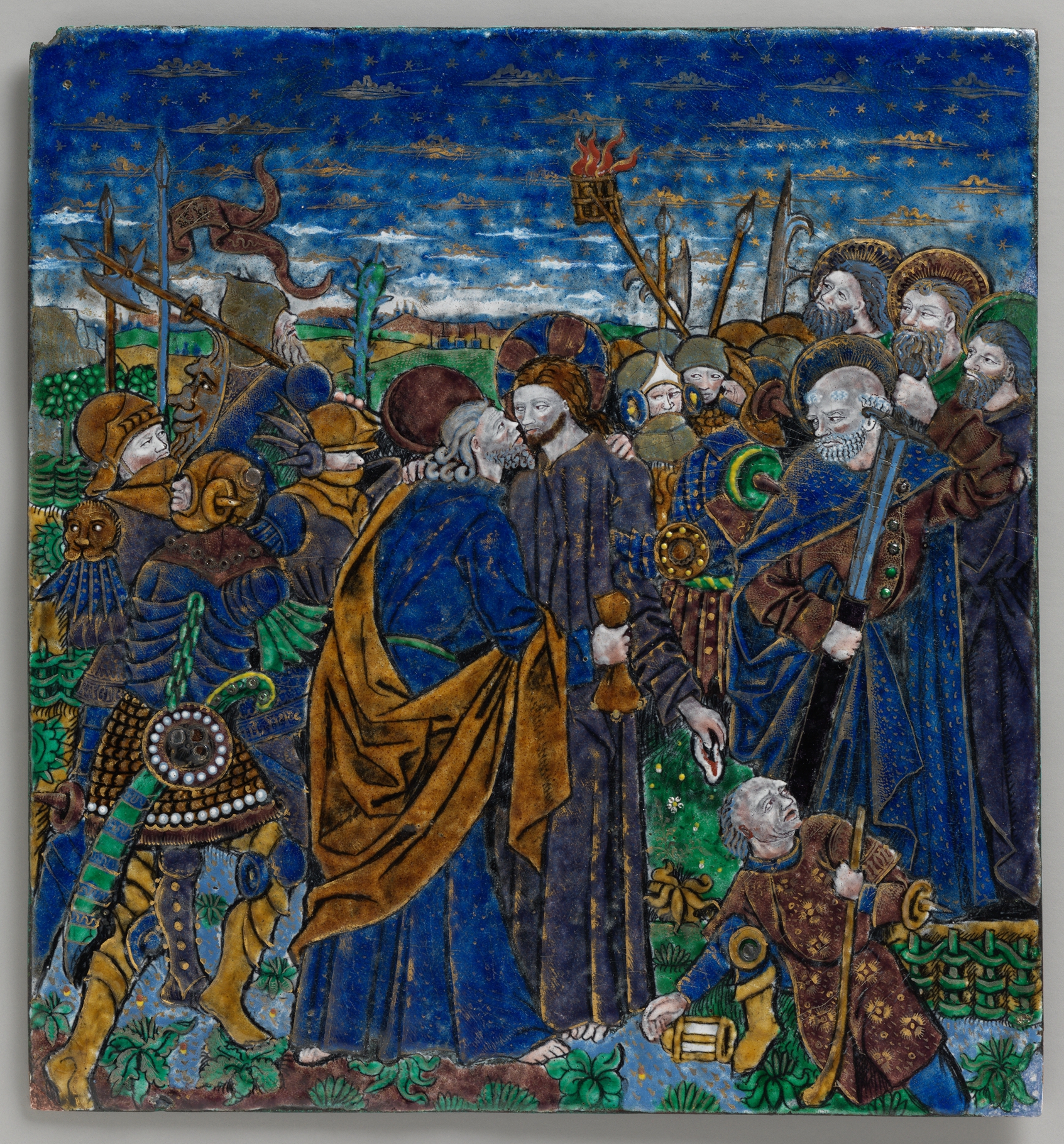
Plaque with The Betrayal of Christ
Doctrinal reflection
This plaque depicting the Betrayal of Christ is a French painted enamel on copper dating to the fifteenth century AD, held in the Medieval Art collection of the Metropolitan Museum of Art as part of the Benjamin Altman Bequest of 1913. While the medium—painted enamel on copper—is a Western European technique associated with Limoges production workshops, the iconographic program draws on a long tradition of Passion cycle imagery that intersects with Byzantine formulations of the same scene. The Betrayal (Prodoteia) depicts the moment described in the synoptic Gospels and John when Judas Iscariot identifies Christ to the arresting soldiers with a kiss, simultaneously showing the arrest in the Garden of Gethsemane. Standard iconographic elements typically include the confrontation between Peter and Malchus (the ear-cutting episode), the lanterns and torches of the soldiers, and the psychological tension between Christ's composure and the surrounding tumult. In Byzantine tradition this scene functioned as part of the Dodekaorton or extended Passion narrative cycle, emphasizing Christ's willing submission to suffering as a theological statement of kenotic theology. The painted enamel technique, popularized in fifteenth-century France, allowed fine detail and polychrome narrative unsuitable to cloisonné. Scholarly attention to such plaques focuses on workshop attribution, transmission of iconographic models between East and West via manuscript and ivory intermediaries, and the devotional function of portable Passion cycles for private piety. The piece represents a Western reception of shared Christian narrative conventions rather than a strictly Byzantine production. Sources: Gesta (International Center of Medieval Art); Dumbarton Oaks Papers; Arte Medievale.