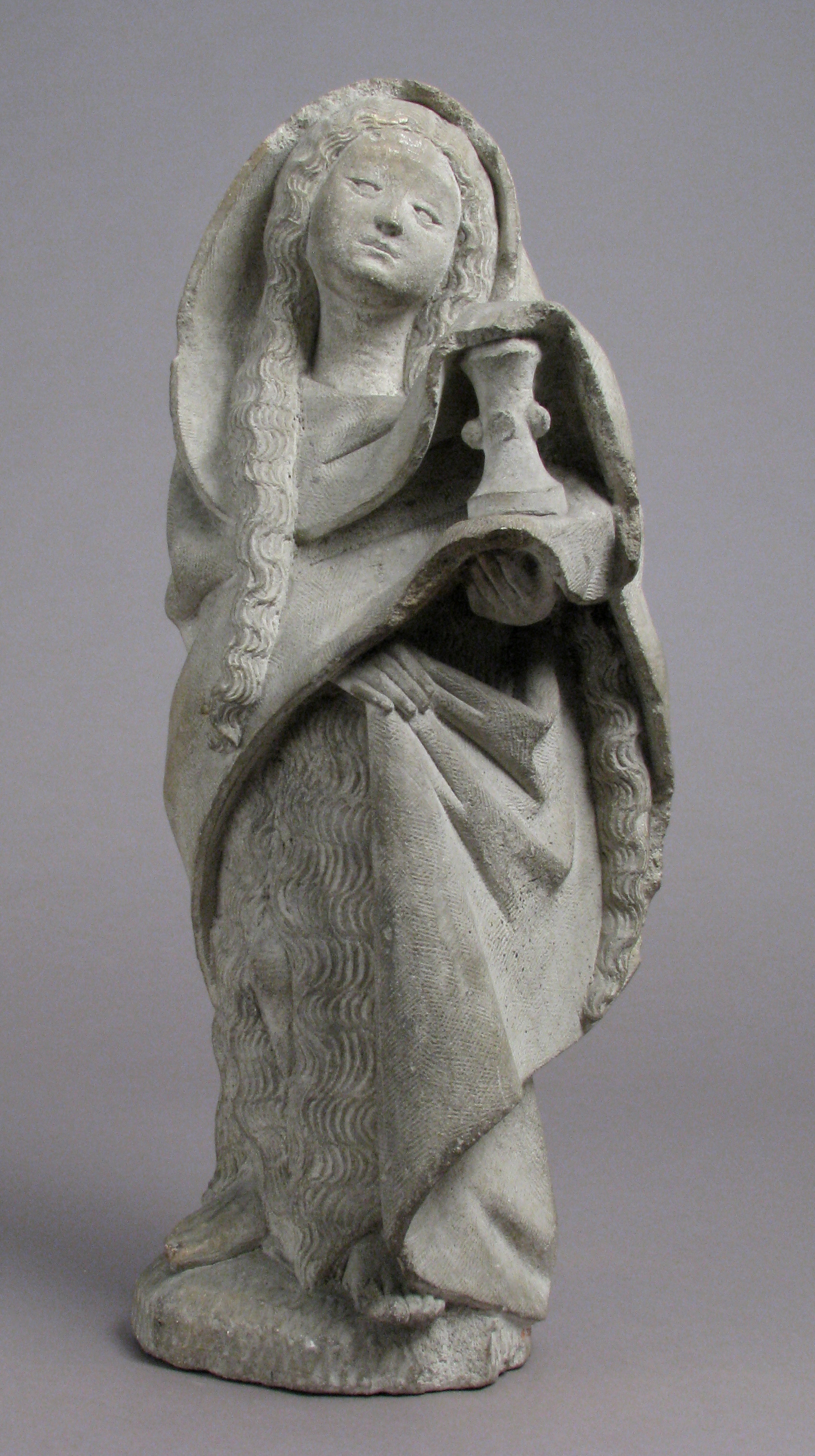
Saint Mary Magdalene
Doctrinal reflection
This entry presents a methodological boundary case for the Scriptorium archive: the object in question is a French limestone statuette of Saint Mary Magdalene dating to the fifteenth century AD, held in the Medieval Art collection of the Metropolitan Museum of Art (Gift of J. Pierpont Morgan, 1916). As a three-dimensional sculptural work in limestone, it falls outside the defined Byzantine media categories of mosaic, fresco, icon, and manuscript illumination, and its French Gothic or late-medieval French regional provenance places it firmly within the Western Latin artistic tradition rather than the Eastern Mediterranean Byzantine sphere. Mary Magdalene as an iconographic subject carries substantial theological weight across both traditions—as myrrh-bearer (myrrhophore), apostle to the apostles, and penitent—but her representation in French Gothic stone sculpture develops along distinctly Western hagiographic and devotional lines, influenced by the Provençal cult centered at Vézelay and later Sainte-Baume, rather than Byzantine theological programs. The Magdalene's identification in Western tradition conflates the Lukan penitent sinner, Mary of Bethany, and the witness to the Resurrection, a synthesis largely rejected in Eastern exegesis. Scholarly treatment of this object would appropriately belong to studies of Gothic sculpture, Burgundian or Île-de-France workshops, and Western Marian-penitential iconography. This archive record is retained as a boundary marker but cannot be fully classified under Byzantine parameters. Sources: Metropolitan Museum of Art Bulletin; Gesta (International Center of Medieval Art); Speculum: A Journal of Medieval Studies.