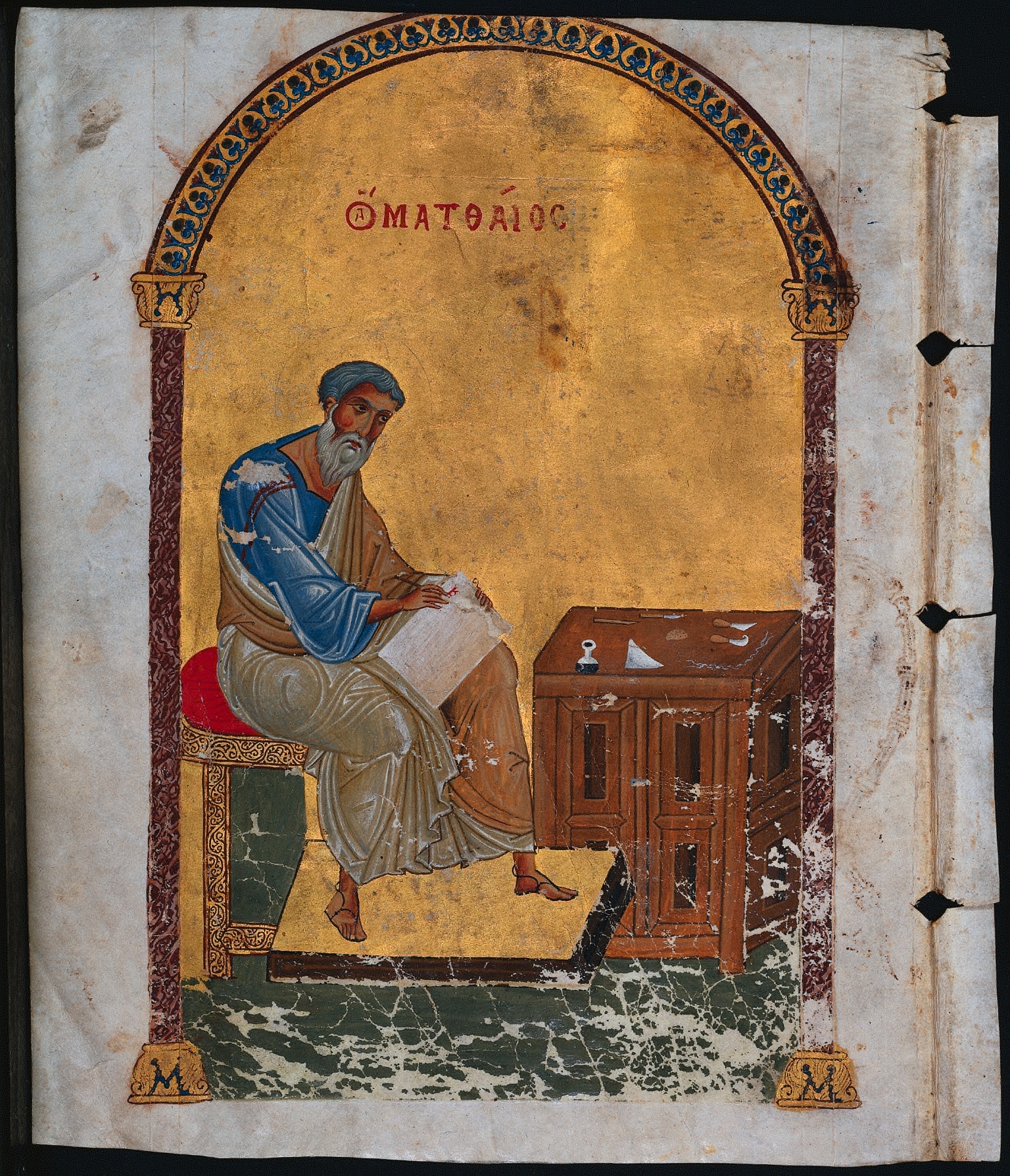
Leaf from a Lectionary with St. Matthew
Doctrinal reflection
This manuscript leaf depicting the Evangelist Matthew derives from a lectionary commissioned for or presented to the Holy Trinity Monastery at Chalke, Constantinople, by the Empress Katherine Komnene in 1063 AD. Executed in tempera and gold on vellum, the folio exemplifies the high standard of Constantinopolitan court manuscript production during the middle Byzantine period, specifically within the culturally productive reign of the Komnenian dynasty's early phase. The Evangelist portrait type represented here belongs to a well-established iconographic convention in which the Gospel author is depicted in a writing posture, surrounded by the instruments of his craft—stylus, dividers, pens, knife, burnisher, and inkpots—all of which carry both practical and symbolic weight, aligning the act of writing with sacred witness. This accumulation of scribal implements is notably elaborate and constitutes a significant point of comparison with contemporary Constantinopolitan Gospel books. The inclusion of such tools underscores the Byzantine theological understanding of the Evangelists as authoritative eyewitnesses whose textual testimony carries quasi-apostolic authentication; their portraits function as visual colophons, guaranteeing the integrity of the scriptural text they precede. The gold ground situates Matthew within a heavenly, atemporal realm, consistent with middle Byzantine representational theology. The imperial provenance—a gift from Empress Katherine Komnene—renders this leaf additionally significant for the study of aristocratic and imperial patronage networks in eleventh-century Byzantium and the role of donated liturgical books in monastic endowment. The manuscript is currently held at the Cleveland Museum of Art. Sources: Dumbarton Oaks Papers; Byzantinische Zeitschrift; Kurt Weitzmann, 'Illustrations in Roll and Codex.'