Saint Roch
Doctrinal reflection
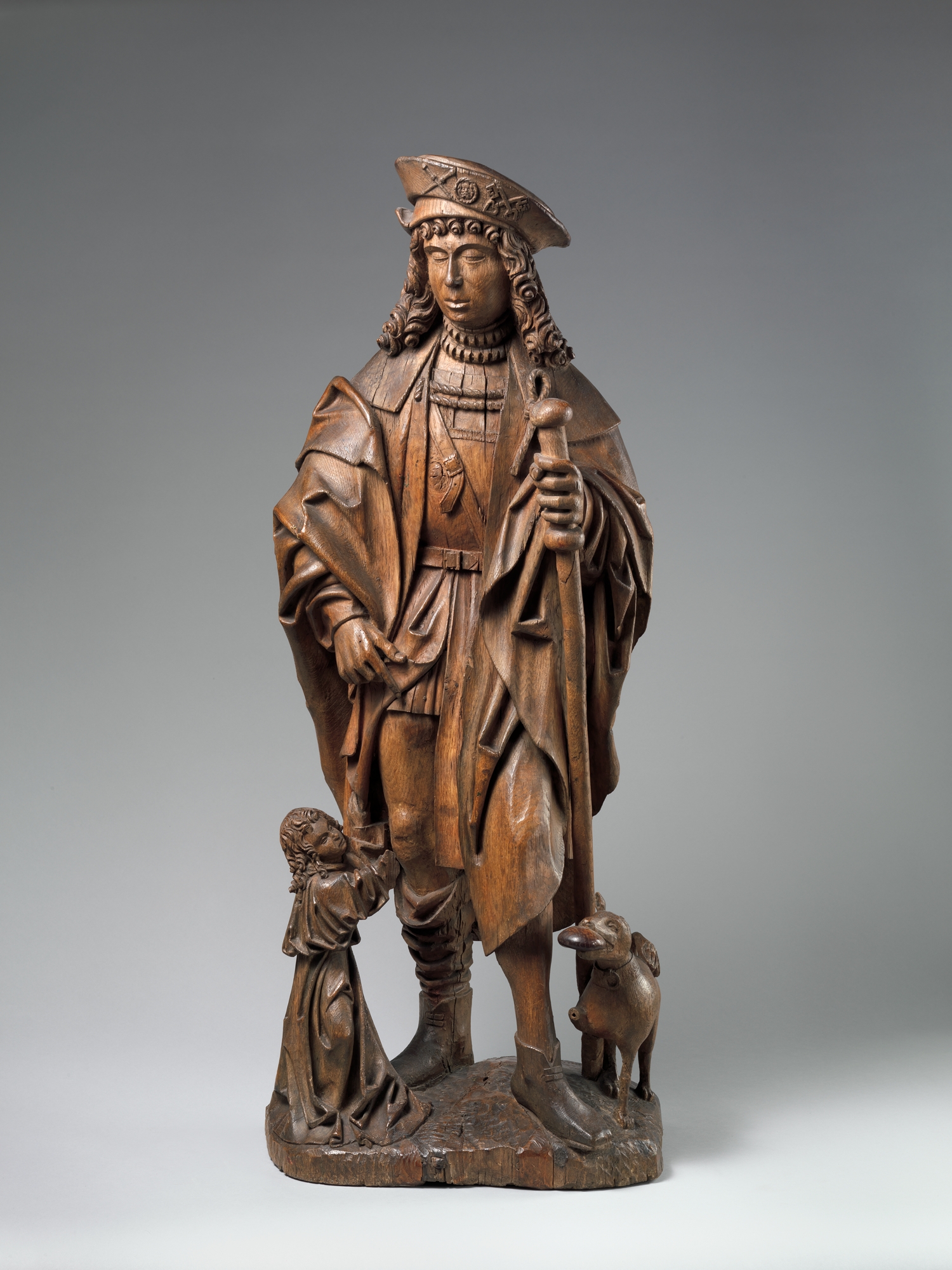
This carved oak statue of Saint Roch dates to the early sixteenth century and was produced in Germany, likely within the flourishing late Gothic wood-sculpture tradition of the Rhineland or southern German workshops. It entered the Metropolitan Museum of Art's medieval holdings as part of the 1916 gift of J. Pierpont Morgan. The medium is polychromed or unpolychromed carved oak, consistent with the dense workshop production of devotional sculpture that served parish churches, confraternities, and private chapels across German-speaking territories during the period.
Roch (Rocco) is a figure whose historical biography is poorly attested; scholarly consensus places him tentatively in the fourteenth century, though the Legenda Aurea and later hagiographic tradition embellished his life considerably. He is not a biblical figure, and no canonical Scripture pertains to him directly. Iconographically, he is identified by two conventional attributes visible in such works: the pilgrim's staff and hat, and the plague bubo exposed on the thigh, accompanied by the dog who, according to medieval tradition, brought him bread during his illness. These attributes derive entirely from hagiographic tradition, not from any scriptural source.
Roch became one of the most prominent intercessory figures invoked against plague in late medieval and early modern Europe, with confraternities dedicated to him multiplying rapidly after the Black Death cycles of the fourteenth and fifteenth centuries. The veneration documented here — the statue functioning as a cult image — is recorded as a widespread historical-devotional practice of its era, not presented as a biblical norm. The statue represents the mature late Gothic figural style: elongated proportions, expressive drapery folds, and psychological particularity characteristic of German carvers of the period.
Sources: Metropolitan Museum of Art Bulletin; Wolfgang Schmid, studies in Rhenish late Gothic sculpture; Jacobus de Voragine, Legenda Aurea (hagiographic source identification).