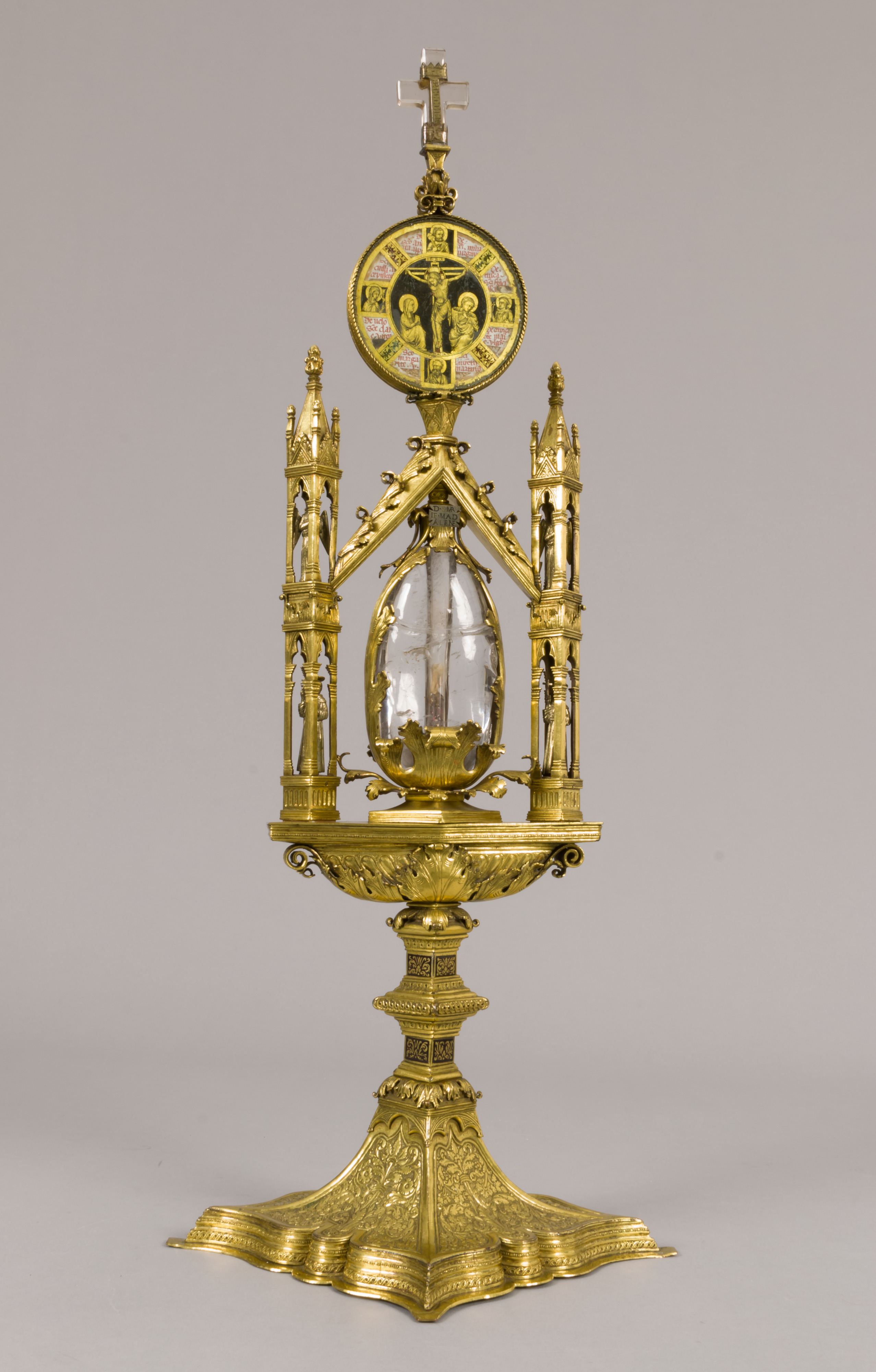
Reliquary of Mary Magdalene
Doctrinal reflection
This reliquary monstrance, catalogued in the Metropolitan Museum of Art's Medieval collection (acc. gift of J. Pierpont Morgan, 1917), is a North Italian composite object assembled across the fourteenth and fifteenth centuries AD. Its materials — gilded copper, gilded silver, rock crystal, verre églomisé (glass with applied gold or silver leaf on the reverse), and a human tooth (identified by the museum as Homo sapiens) — are characteristic of late medieval relic display culture in northern Italy, where the monstrance form evolved to make relics visible to the faithful while encasing them in precious metalwork. The object belongs to a class of devotional artifacts shaped by the widespread cult of Mary Magdalene, which intensified dramatically after the thirteenth-century Dominicans promoted her as an apostolic preacher and penitent par excellence. The identification of Mary Magdalene in Western tradition conflates three distinct New Testament figures: Mary of Magdala (from whom seven demons were cast out, Luke 8:2; present at the crucifixion, burial, and resurrection, John 20:1–18), the unnamed sinful woman of Luke 7:36–50, and Mary of Bethany (John 11–12). Gregory the Great's homily of AD 591 codified this fusion; Eastern Christianity and most modern scholarship reject it. The tooth displayed here would have been venerated as a contact relic under that composite identification — a practice the museum documents honestly as historical devotion. The verre églomisé panels likely bear hagiographic imagery derived from the fused Magdalene tradition, not independently from Scripture. Scholarly analysis of comparable North Italian monstrance reliquaries appears in: Gazette des Beaux-Arts; Arte Cristiana; and Burlington Magazine.