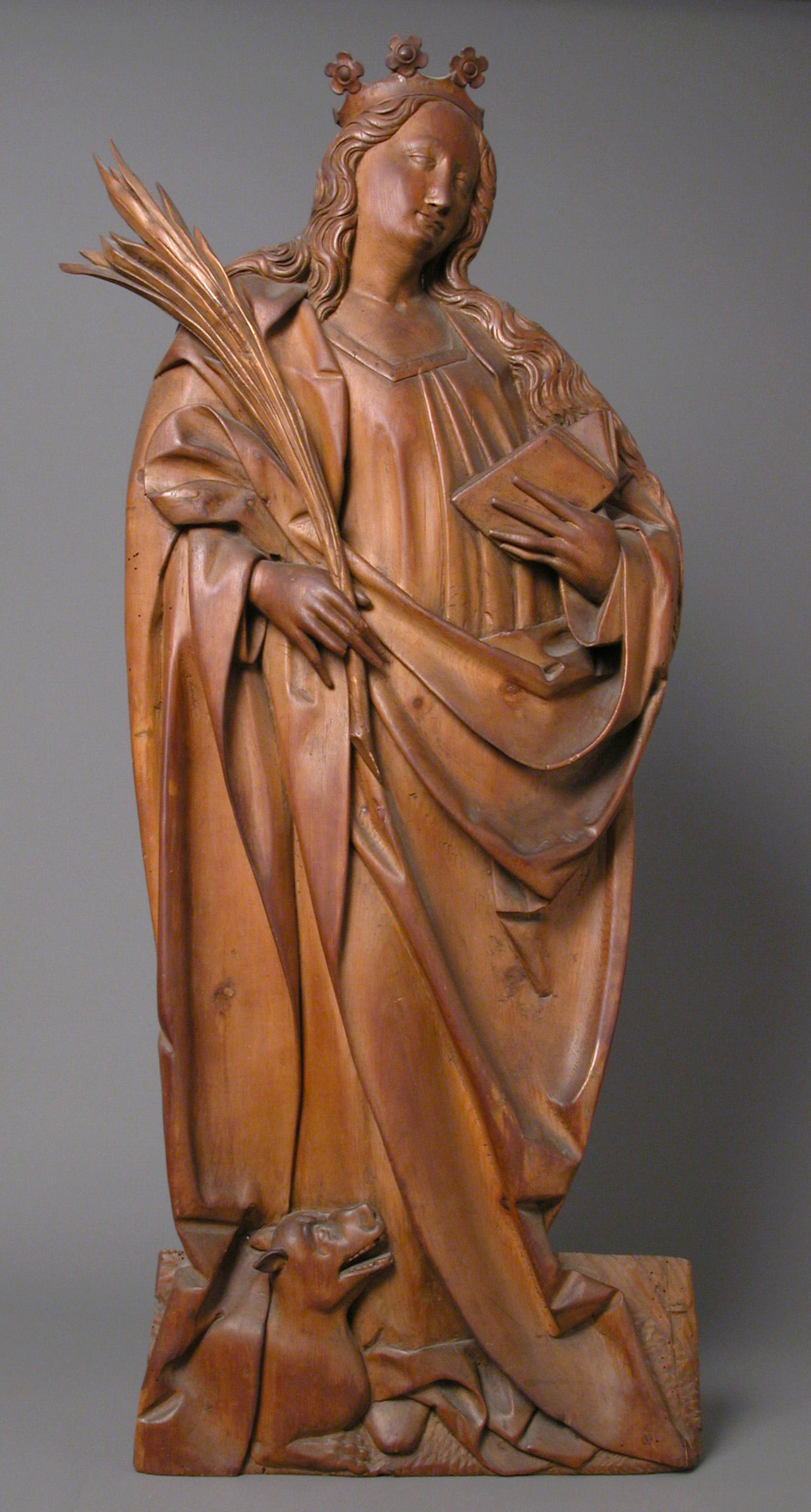
St. Margaret
Doctrinal reflection
This relief statue of St. Margaret, carved in German limewood around AD 1520, belongs to the final flowering of late Gothic wood sculpture in the German-speaking lands, a tradition exemplified by masters such as Tilman Riemenschneider and Veit Stoss. The work entered the Metropolitan Museum of Art as part of the J. Pierpont Morgan gift of 1916. Limewood (Tilia species) was the preferred medium of South German and Franconian carvers due to its fine, consistent grain, which permitted the delicate undercutting and drapery complexity visible in this type of devotional relief. The subject, Margaret of Antioch, is known in Eastern tradition as Marina; her cult was widespread in medieval Europe but her biography rests entirely on hagiographic legend, not Scripture or verifiable early history. The Legenda Aurea (compiled by Jacobus de Voragine, c. AD 1260) popularized the narrative in which Margaret, a virgin martyr under Diocletian, was swallowed by a dragon—identified with Satan—and escaped unharmed when the cross she carried caused the beast to burst asunder. This iconographic program, standard by the fifteenth century, appears in relief carvings of this type through the attribute of the dragon at the saint's feet or subdued by a cross-staff. Theologically the image participates in the late medieval cult of intercessory saints, a devotional practice the archive documents historically but does not endorse as biblical norm; Scripture assigns sole mediation to Christ (1 Timothy 2:5). The sculptural style reflects the expressive realism and deeply channeled drapery folds characteristic of Upper Rhenish workshops c. AD 1500–1525. Sources: Metropolitan Museum of Art Bulletin; Paul Williamson, Gothic Sculpture 1140–1300 (Yale, 1995); Jeffrey Chipps Smith, The Art of the Goldsmith in Late Fifteenth-Century Germany (2006).