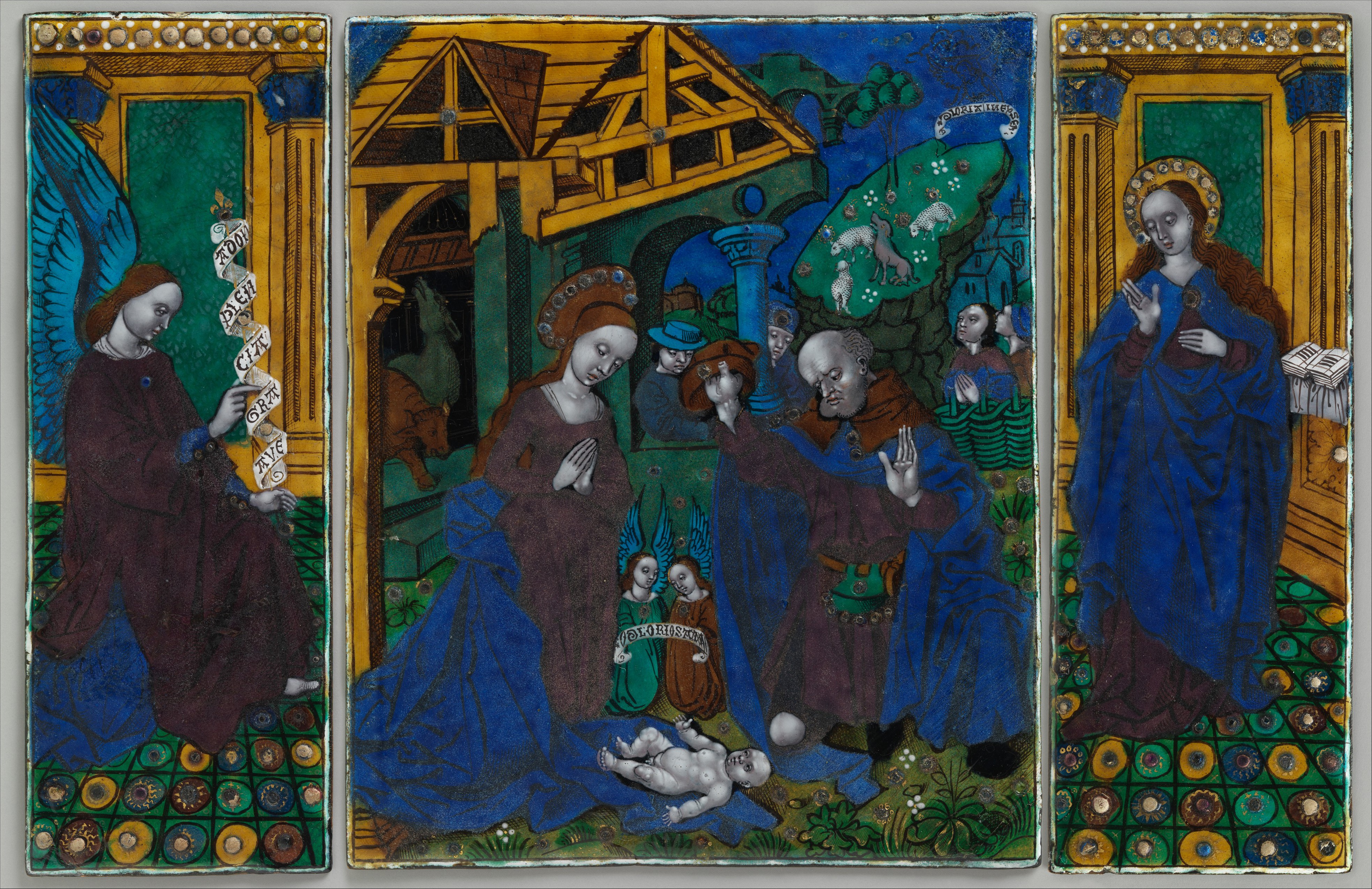
Three plaques from a triptych with the Adoration of the Shepherds, Flanked by the Angel Gabriel and the Virgin Annunciate
Doctrinal reflection
These three plaques, bequeathed by Benjamin Altman in 1913 and now held in the Medieval Art collection of the Metropolitan Museum of Art, New York, constitute the surviving wings and central panel of a devotional triptych executed in painted enamel on copper in France in the early sixteenth century (circa AD 1500–1530). Painted enamel on copper—distinguished from earlier champlevé and cloisonné techniques by the application of vitreous pigments directly onto a prepared metal ground—was pioneered at Limoges in the late fifteenth century and became the dominant luxury medium of French decorative arts in the following decades. The central panel presents the Adoration of the Shepherds, situating the Nativity within the Flemish-inflected compositional conventions that entered French workshop practice through Netherlandish panel painting and manuscript illumination. The flanking wings carry the Angel Gabriel and the Virgin Annunciate, constituting a spatially disjointed Annunciation that frames the central scene typologically: the Incarnation announced is made manifest in the crèche. This pairing encodes standard Marian theological argument—the virginal conception confirmed by the angel's salutation (Luke 1:26–38) is inseparable from the Incarnate Word's appearance to the shepherds (Luke 2:8–20). The palette typically exploits the translucency of the enamel ground against copper, with grisaille highlights and gilded passages enriching flesh modeling. Attribution to a specific Limoges atelier remains unresolved in current scholarship. The ensemble is iconographically conventional but technically accomplished, representative of early sixteenth-century French liturgical luxury production. Sources: Metropolitan Museum of Art Bulletin; Corpus des Émaux Méridionaux; Burlington Magazine.