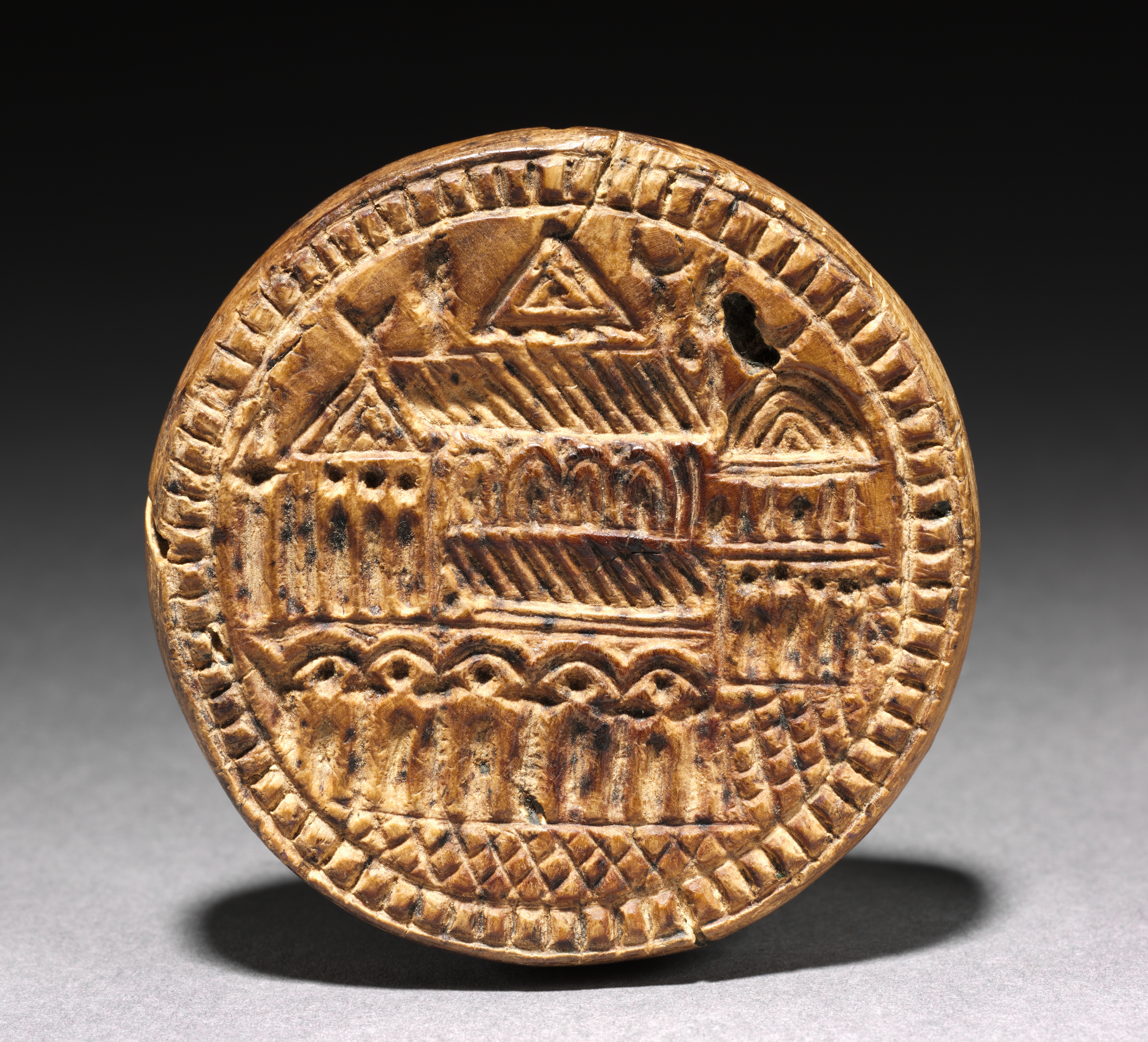
Mold for a Eulogia (Blessing) Bread
Doctrinal reflection
This wooden mold for eulogia (εὐλογία, 'blessing') bread, dated broadly to the 7th–10th century AD and associated with Byzantine Palestine, belongs to a well-attested category of devotional material culture produced for pilgrimage sites. The object was used to impress sacred imagery—here identified as a representation of the Church of the Holy Sepulcher complex atop Golgotha—into loaves of bread distributed to pilgrims visiting Jerusalem as a commemorative and apotropaic token. Eulogia bread occupied a liminal space between liturgical practice and popular piety: while not consecrated Eucharist, such loaves carried the blessing of proximity to sacred loci and functioned as portable extensions of pilgrimage experience. The iconographic program of the mold reflects the centrality of the Anastasis rotunda and the Golgotha aedicule in Byzantine Jerusalem's sacred topography, architectural forms well documented in contemporary pilgrimage accounts and parallel stamp artifacts in terracotta and metal. The medium of wood situates this object within a corpus of organic-material liturgical tools from the eastern Mediterranean, relatively rare survivors given wood's susceptibility to deterioration. The 7th–10th century range spans the Persian conquest of Jerusalem (614 AD), the Islamic conquest (638 AD), and subsequent Byzantine cultural persistence in Palestinian Christian communities, complicating precise attribution of patronage. Comparable eulogia stamps survive in the collections of the Dumbarton Oaks Research Library and Collection and the Louvre. The object's current location at the Cleveland Museum of Art makes it an important witness to Byzantine pilgrimage culture outside European institutional concentrations. Sources: Dumbarton Oaks Papers; Journal of Early Christian Studies; Gary Vikan, Byzantine Pilgrimage Art (Dumbarton Oaks, 1982).