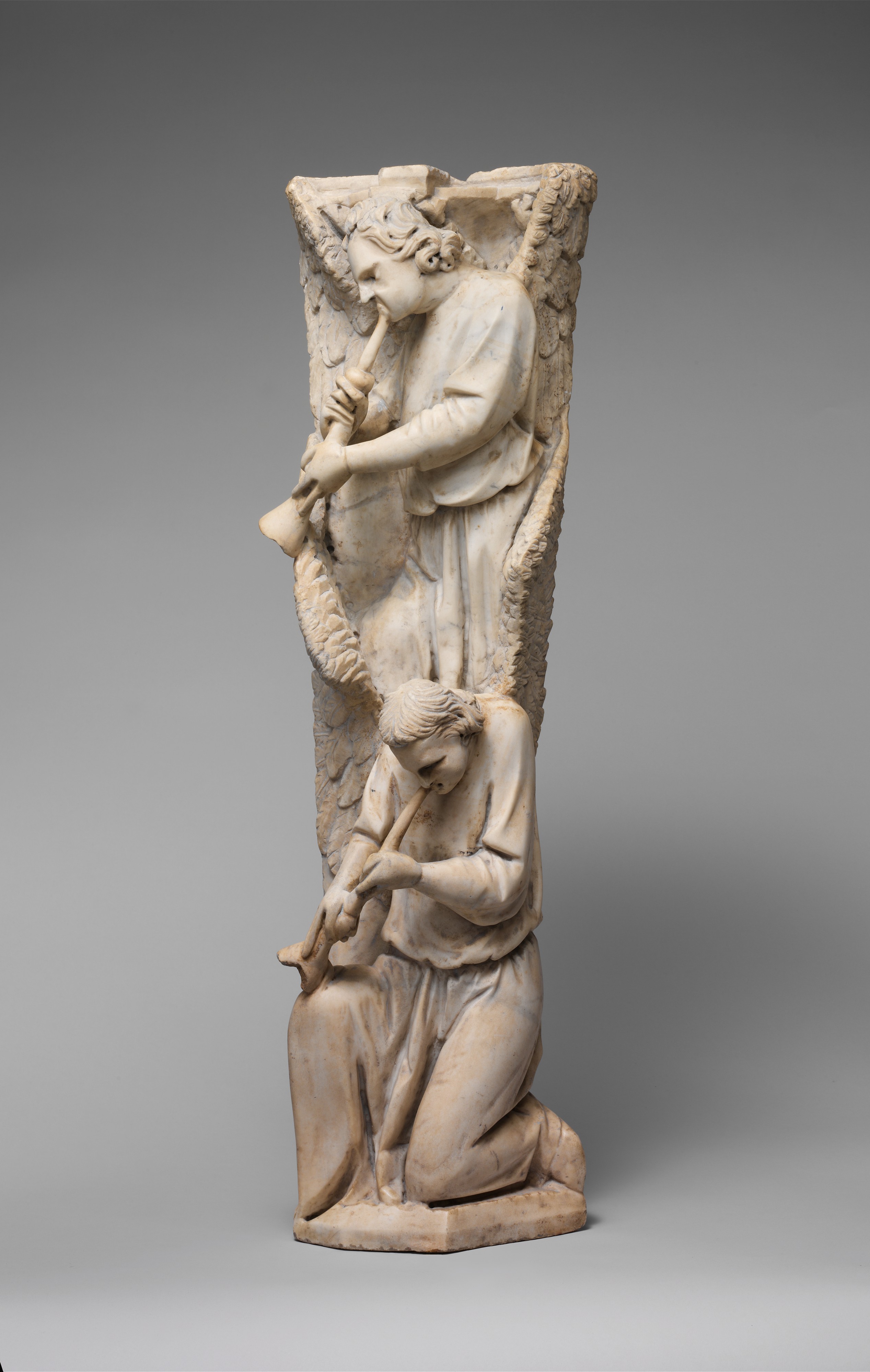
Pilaster of Angels Sounding Trumpets from the Parapet of a Pulpit
Doctrinal reflection
This marble pilaster, dated 1302–1310 AD and attributed to Central Italian workshop production, derives from the parapet of a pulpit and is now held in the Medieval Art collection of the Metropolitan Museum of Art (Frederick C. Hewitt Fund, 1910). The material is Lunense marble quarried at Carrara, with surviving traces of polychromy indicating the original surface was painted, a reminder that medieval stone sculpture was rarely left in its present monochromatic state. Pulpit parapets of this period — typified by workshops associated with Giovanni Pisano and Arnolfo di Cambio — frequently incorporated angel musicians along their decorative registers, functioning both as formal ornamentation and as theological program. The trumpeting angels depicted here evoke the eschatological soundings described in Revelation 8–11 and 1 Corinthians 15:52, where the last trumpet signals resurrection and divine judgment. Their placement on a pulpit — the site of scriptural proclamation — creates a deliberate liturgical resonance: the preached Word and the final trumpet are aligned as instruments of divine summons. The raised trumpets also echo Matthew 24:31, where angels gather the elect at Christ's return. Iconographically, the angels conform to the Central Italian Gothic idiom: drapery rendered with classicizing attention inherited from the Pisano tradition, figures oriented frontally or in slight contrapposto. Conservative scholarly consensus places this object within the broader Dugento-Trecento Italian revival of monumental pulpit sculpture, a tradition whose theological ambitions are inseparable from its formal innovations. The polychrome traces merit further technical study to reconstruct the original visual program. Sources: Mitteilungen des Kunsthistorischen Institutes in Florenz; Gesta (International Center of Medieval Art); Metropolitan Museum Journal.