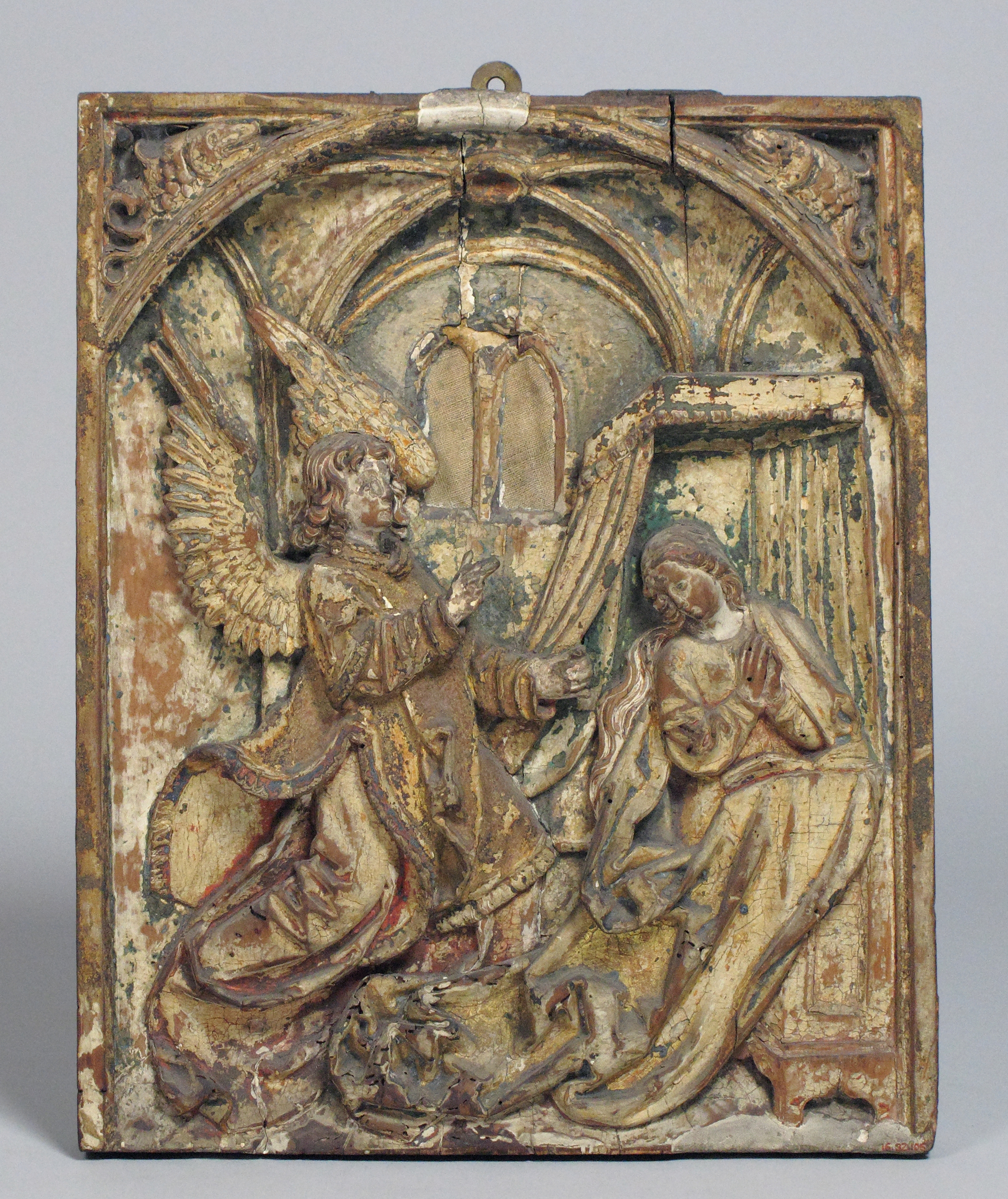
The Annunciation
Doctrinal reflection
This sixteenth-century German pearwood relief depicting the Annunciation belongs to the tradition of small-scale devotional sculpture that flourished in Germanic workshops during the late medieval and early Reformation period. The scene illustrates Luke 1:26-38, in which the angel Gabriel announces to Mary that she will conceive the Christ child through the Holy Spirit. German limewood and pearwood carvers of this era — working in regional centers such as Augsburg, Nuremberg, and the Rhine valley — achieved remarkable refinement in small relief compositions, combining late Gothic drapery conventions with emerging Renaissance spatial sensibilities. The typical iconographic program for an Annunciation relief includes Gabriel in a posture of address, often bearing a lily (traditional symbol of purity, extrabiblical in origin), Mary in an attitude of humble reception, and frequently a dove descending or rays of light indicating the Holy Spirit. A book or lectern may appear before Mary, referencing the medieval tradition — not Scripture — that she was reading Isaiah 7:14 at the moment of Gabriel's arrival, a detail popularized through devotional literature and the Protoevangelium of James, here named as apocryphal. The pearwood medium is characteristic of German relief carving; its fine grain permitted the intricate undercutting and textile detail that define the period's virtuosity. The Gift of J. Pierpont Morgan (1916) situates this object within a major wave of medieval acquisitions that formed the Metropolitan Museum's medieval holdings. As a portable devotional object, such reliefs served private piety rather than public liturgy, and the historical-devotional context of icon and relief veneration is documented here without endorsement. Sources: The Art Bulletin; Zeitschrift für Kunstgeschichte; Metropolitan Museum of Art Bulletin.